
A return to Seville. Visiting chums whose fabulous wedding we’d attended, in Seville, whilst Covid was still dominating world headlines. A Gatwick departure, flight and taxi to perhaps 15 minutes amble from Seville FC (where chums live) all trouble free. Ironically, neither of our hosts has any interest in the beautiful game.
Landing quite late meant, once gossip caught up, we retired to the guest boudoir.
Carmona
Breakfast and natter completed, an Uber to Carmona, a Renaissance town overlooking the central plain of Andalusia. Cost, around €30. Journey time, 25 minutes or so.
It was chilly and damp. Those weather people had been telling fibs. Wandering around Carmona’s Renaissance historic heart it’s impossible not to notice the abundance of churches, monasteries and other religious paraphernalia. Beautiful all, but surely an over indulgence? Bygone inhabitants must have been especially keen or especially naughty.
Prominent churches include Iglesia de Santa María de la Asunción (15th century, predictably constructed on former mosque); Iglesia de San Pedro (of tower fame, dating back to 15th century); Iglesia de San Felipe (another former mosque morphed into a Renaissance church); Iglesia de San Bartolomé (more 15th century churchyness).
All received later embellishments, Baroque much favoured. There’s a few Euro entrance fee to some.
The Alcazar fortress took us a little by surprise. We hadn’t expected it to be there. Brought into existence by the Carthaginians (possibly a planet conquering alien race in Star Trek), inevitably added to by the Romans, tweaked by the Moors and finally the Christians, this fortress palace is a mighty monster.
Sadly neglect, earthquakes and vandalism have left the fortress in an unhappy state. Nevertheless, it still projects power and control, dominating the landscape in which it resides.
More positively, the striking fortress gate is integrated into the luxurious Parador de Carmona Hotel. And, on our visit, thankfully undergoing restoration.
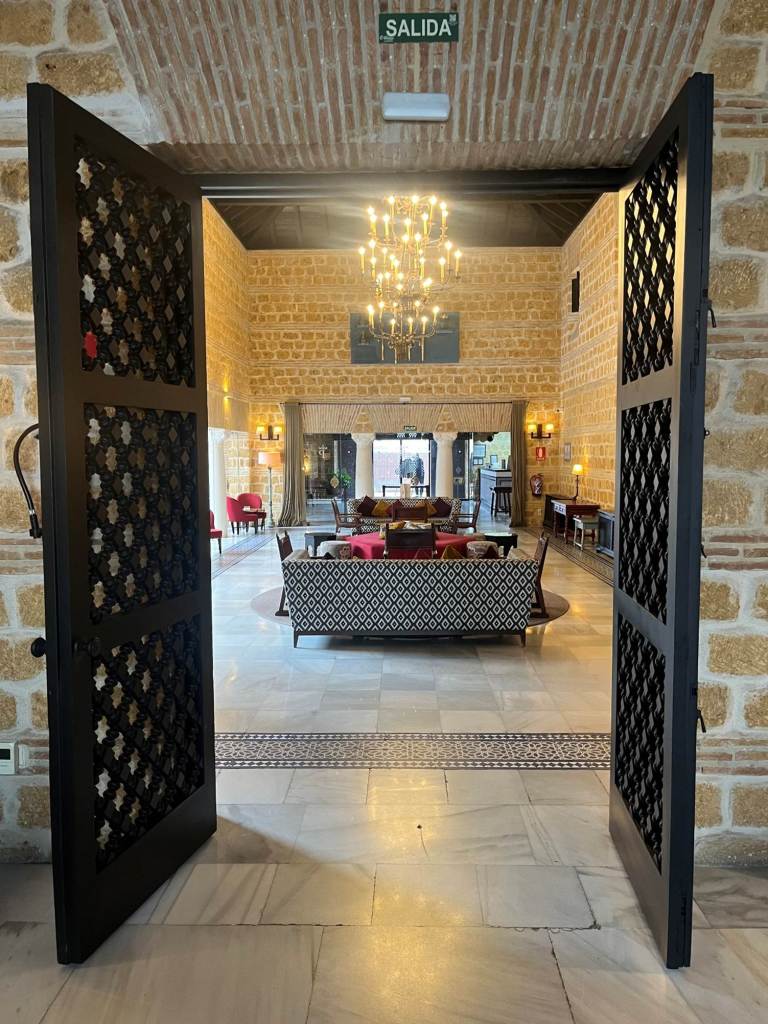
Do have a snoop into the hotel. It’s quite beautiful and acts as a viewing platform across the Andalucía landscape. Which is surprisingly flat.
Undoubtably beautiful the historic centre feels a little run down and scruffy around the edges. In its defence the chilly and damp weather and almost deserted streets did Carmona no favours.
A wait for return Uber afforded time for quick explore of the modern town. It’s an interesting contrast. OK, the weather was still rubbish but a bustling high street and attractive neighbourhoods left a positive impression.
Back to our hosts, who knowing of my craft beer fetish, kindly booked a table at a brewery a 10 minute walk from their home.
Unbeknown to them, Cruzcampo could never be my cup of saison. Nevertheless, the large bar is striking, live music always welcome and one IPA unexpectedly quaffable.

More importantly, and worth applauding, many of the staff are taken from less privileged backgrounds and given the opportunity to thrive. Our young lady was delightful. Worth a beer or two.
Friday morning, post brekkie, we strolled into the old town, perhaps 25 minutes from our hosts. The stroll, with exception of Estadio Ramon (Seville FC), offered little of note.
Not so the old bits. Old town Seville (Barrio Santa Cruz, a former Jewish quarter) is a heady mix of Islamic, Gothic and Renaissance architecture dotted with narrow passageways, pretty squares and grand churches. Having previously tick boxed, explored and quite possibly bought a fridge magnet, aimlessly meandering was our chosen option.
Wandered into the main university complex (mid 18th century), spotting anxious prospective parents being given the tour presumably before allowing their offspring to escape. Next, a riverside amble, the River Guadalquivir our soggy companion. Supposedly, the only navigable river in Spain and a significant factor in Seville’s trade success and subsequent development.
The new town, a mix of 18 and 19th century architecture, shouts elegance. With more modern influences, some unfortunately less successful than others.
Post welcome and excellent coffee and fresh orange juice pause, something a mite different. Standing in the Plaza de la Encarnación is Metropol Parasol, also known as the ‘mushrooms of Seville’. Supposedly the largest wooden construction in the world, opened in 2011, and an opportunity to revitalise the square. A meat and fish market lives below, stalls above. Roman ruins are cleverly incorporated into the structure. So cleverly I don’t recall spotting them.
A car park was the original fate of the square. I prefer the mushroom.
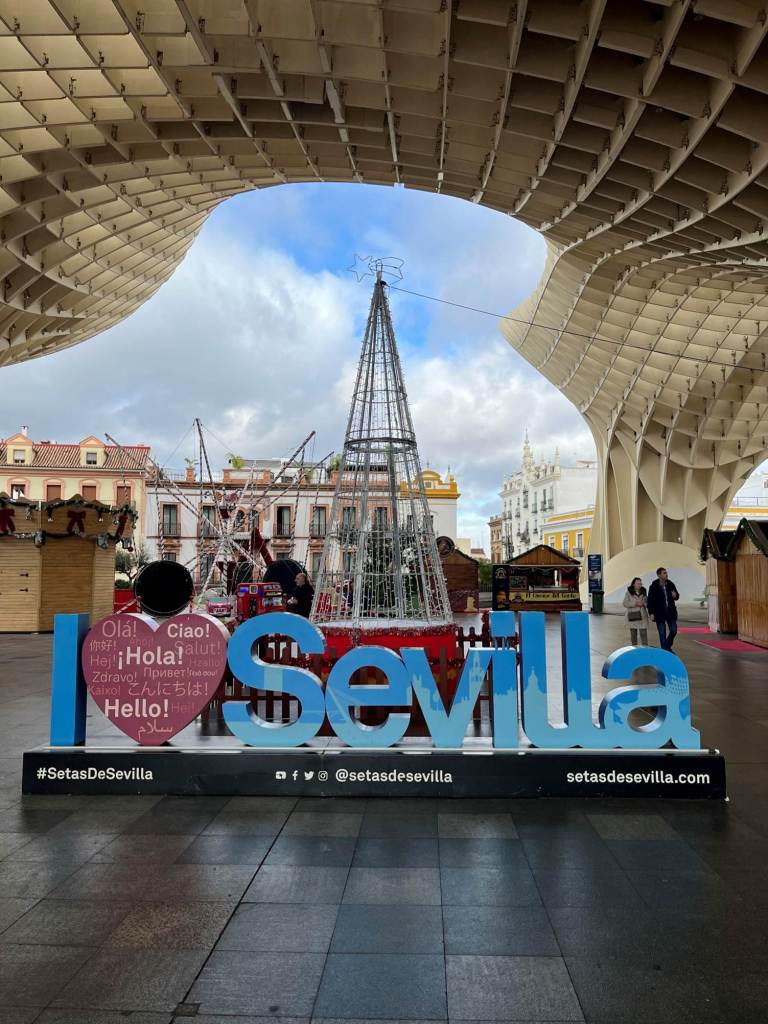
Plus, a bonus a bonus craft beer gaff lives in the meat market. Whoopee. La Joyeria. Open during day though appears to close late afternoon – presumably keeping market hours.
A noteworthy venue, though the smell might not be to all tastes. A tad meaty. And chilly. Nevertheless, six taps and couple of fridges tempt punters. The chap (owner?) serving those tempting libations is helpful and friendly. Pop in, say hello.
That evening. bus and stroll to a wine bar – Pina Lola. Another chum of host. Conversation and wine flowed, food appeared.
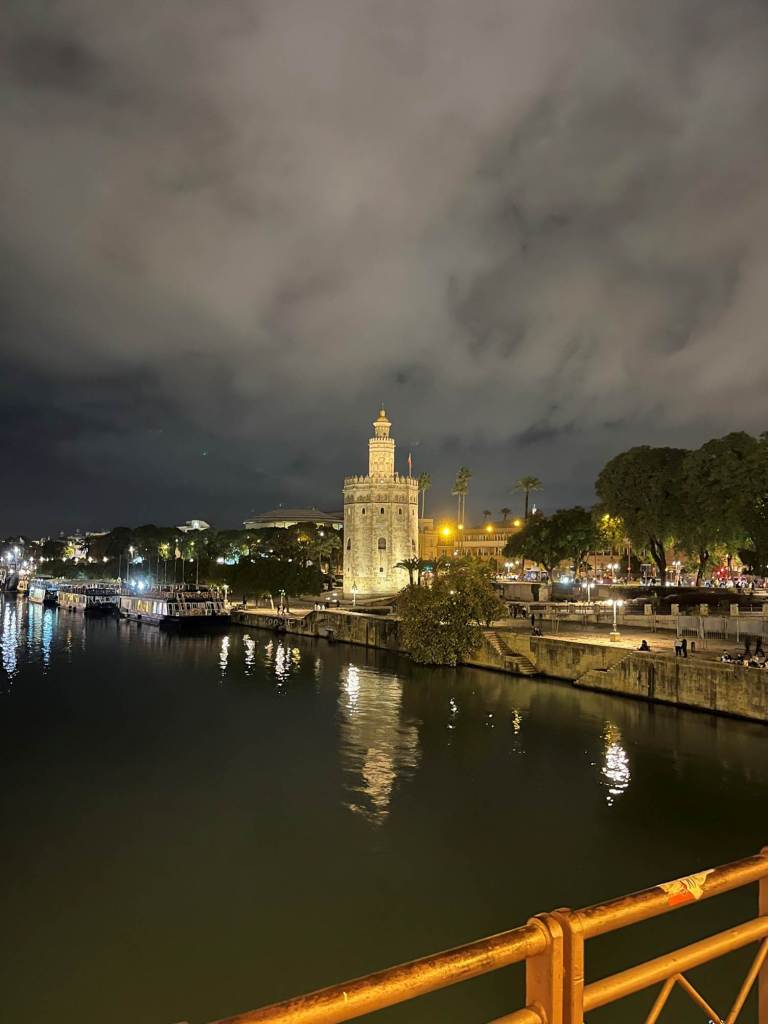
A final alcoholic beverage, in cocktail form, was sipped atop a hotel rooftop terrace peering over the Cathedral.
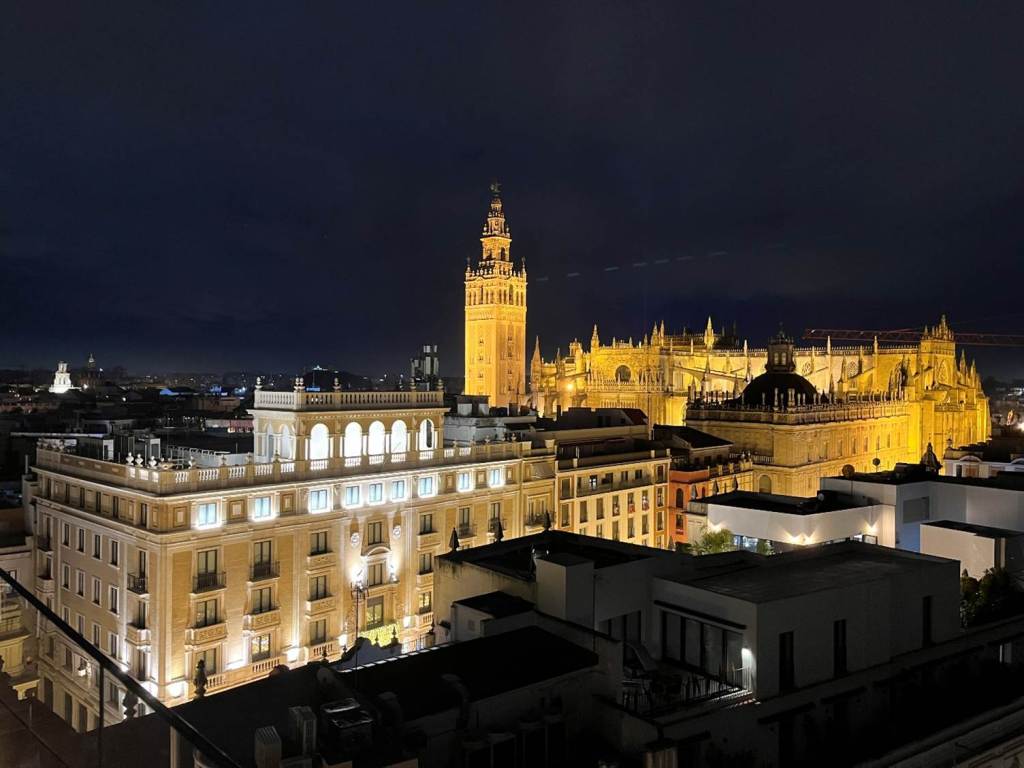
Charming way to finish off the evening.
Cordoba, Courtyards and Long Lunches
The following morning a taxi delivered us plus host to train station, a train efficiently to Cordoba in less than an hour.
Cordoba, renown for its courtyards (there’s a festival every year to prove it), is a city both have previously stayed and enjoyed. Guided by our host, and one his favourites, located in plaza de Don Gome, resides the charming 14th century Palace of Viana.
We paid only to view the 12 courtyards (believe €8.5) though other rooms can be added for an extra cost. Each courtyard is extravagantly decorated with plants and orange trees. Even, as it was, in winter. Other attractions are dotted amongst the courtyards.
The area surrounding Palace of Viana is a delightful collection of white painted terrace streets perhaps the equal of the palace itself. Leave time for a quick gander.
Familiarly nondescript neighbourhoods brought us to a Michelin recommended restaurant. Terra Olea and another host favourite.
Exquisite food, delightful company, decent wine. A suitably long lunch. One of the great pleasures of existence.
Museums and Planes
A smooth return journey followed by further tipples and conversation back at our hosts.
The next day was sadly our last. However, a late flight meant an opportunity for some art – Museo de Bella’s Artes de Sevilla. The 16th century building (though extensively remodelled in the 17th), was once a convent morphing into a gallery in the 19th century.
Spanish masters include Francisco da Herrera, Murillo, El Greco, Velásquez, Francisco Zurbarán plus a few non-Spanish interlopers. The ground floor hosts the Spanish chaps, the first floor the interloper chaps.
Babies and children are not my thing. At all. Neither am I religious. The ground floor is a love fest of religious scenes, religious characters and, most disturbingly, cherubs. I’ve a particular dislike of these creepy figures. Especially those with only a head and wings sprouting from better not ask. Really not my cup of canvas. Or Sus’s.
Nevertheless, there’s no denying the artistry, and in some cases, power of these daubs. To many, in the 17th century, they quite possibly were terrifying.
The first floor offers respite. Helped by a little Dutch realism and moderated religious scenes. Whatever your worldview the Museo de Bella’s Artes is worth a gander. Entrance fee is a measly €3 and a hour and a half should amply suffice.
Lunch was a underwhelming affair. And so back to our hosts to collect bags and say goodbye.
Conclusions
Seville, Carmona and Cordoba are blessed with beautiful historic centres and architecture. Yes, the neighbourhoods we encountered lacked any visual appeal. Nevertheless, none were grim, all felt safe. And, of course, true of any city anywhere.
Insider knowledge, from our 2 hosts, proved invaluable. Carmona was on their recommendation and we experienced places not managed in past stays.
Perhaps 3 nights would suffice in Seville, 1-2 in Cordoba with Carmona being day trip material.
Would we live in any? Nope, not for us. Valencia or San Sabastian would be our preference. Nevertheless, all 3 are worthy of your time and consideration.
Thanks for reading, Tony Leigh (December 2025).
 Tony's Travel Blog