
I was 60 on Monday 13 January. From 9.30am onward according to a reliable source. My mum. A 60th birthday party was considered. Briefly. Travel seemed the obvious way to celebrate.
Neither has visited Toulouse. A city with a rich history and the opportunity, by train, to venture beyond its city limits. And it would be warmer than London. It wasn’t.
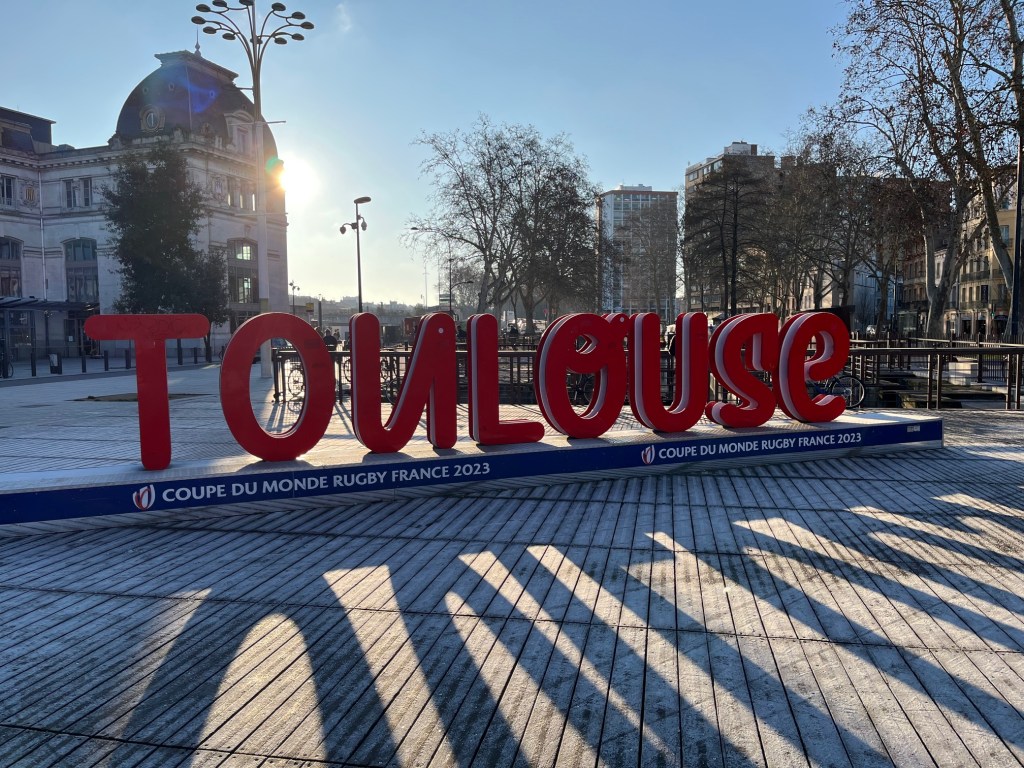
Brief History
Toulouse, located in southern France, and the capital of the evocatively named Occitania, dates back to ancient times. Originally settled by the Volcae Tectosages, a Gallic tribe, before becoming an important Roman colony, known as Tolosa.
Over the centuries, Toulouse has ‘welcomed’ a motley crew of rulers including Visigoths, Merovingian and Carolingian Franks. During the Middle Ages it became the capital of the County of Toulouse. Today, it’s the capital of France’s Midi-Pyrénées region.
The production and trade of pastels (woad), greatly contributed to the wealth the city enjoyed during the 14th to the 16th centuries.
Toulouse, often referred to La Ville Rose, due to distinctive pinkish terracotta buildings, boasts architecture from the Romanesque to Renaissance priods. Highlights include the Romanesque Basilica of Saint-Sernin, the neoclassical : A stunning example of Romanesque architecture, built between the 11th and 13th centuries Capitole de Toulouse, the neoclassical City Hall and National Theatre, the gothic Notre Dame de la Dalbade and the Pont Neuf, the oldest stone bridge in France.
Not a bad selection.
Saturday – Arrival
A 7.45am Heathrow flight to Toulouse seemed a splendid idea. Six weeks later, at 4.20am on a freezing Saturday morning, less so.
Nevertheless, once reasonably alive, the Elizabeth Line, a straightforward check in plus a flight landing 15 minutes early, and we looked akin to geniuses.
A 15 minute bus ride, through predominantly bland but tidy neighbourhoods, brought us to the Jeanne d’Arc Metro station.
Our hotel was a pleasant 5 minute stroll. Bags dropped, formalities completed, exploration commenced. It was a little after 11am.
It was cold. And insisted on remaining so. The south of France in January is not, weather wise, what we’d supposed or hoped.
The main square in Toulouse is an attractive affair dominated by the Capitole, a handsome building dating back to the 12th century. And richly embellished, over the following centuries, by successive important people.
Currently dressed in Neoclassical clothes it gazes benignly (one hopes in these troubled times) over the square of the same name.
Further wanderings brought us to the 11th century La Basilique Saint Sernin. Bit of a monster this one. Architecturally magnificent inside and out.
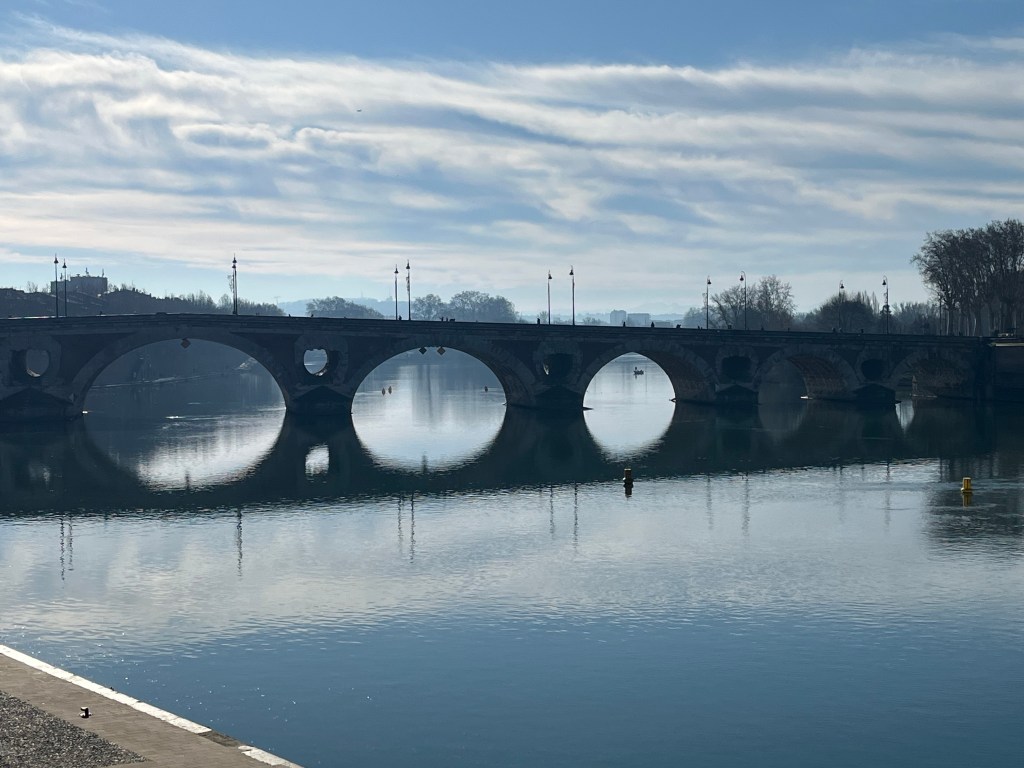
The centre of Toulouse is rather lovely, dating back to the sixteen hundreds. With numerous contributions from later centuries. The Pont Neuf, for example, was started in 1545 and opened in 1632. A money thing. Makes the High Speed 2 (HS2) look well managed.
We ate at the aptly monikered ‘Petit Voyage’ not far from the cathedral. Wonderful little spot discovered completely by chance.
And found a baby supermarket. A Carrefour City. And a regular haunt. Our hotel provided rudimentary and very welcome kitchen facilities including a small fridge. Without an overpriced, underwhelming minibar. Breakfast by Carrefour provided 6 out of 7 breakfasts.
We meandered hither here and hither there before returning to our hotel. Then completed check in and unpacked.
Our day ended at Décapsule, a cheeky bottle shop a few minute’s walk from our hotel. Suspiciously convenient. I’d discovered our hotel.
For more on the excellent Toulouse beer scene please go to https://tonysbeersnobblog.wordpress.com/2025/02/13/toulouse/
Sunday – Carmes
Carmes is a Toulouse neighbourhood nestled between the Place du Salin and Place d’Esquirol. If that helps.
This city village is popular with tourists and locals alike. The pedestrian Rue de Filatiers and Rue Bouquiéres are a conspicuous consumer’s delight – small local shops, pretty cafes all in appealing surroundings.
Saint Stephen’s Cathedral is actually 2 churches amalgamated info one – a bogof kind of vibe. The architecture alternates between the Gothic and Renaissance. It’s quite magnificent with a striking interior.
We arrived as Sunday Mass was concluding. Neither are religious, neither are church goers. Nevertheless, we’ve explored many a magnificent church and never witnessed one so well attended. Fish and wine anyone?
And an insight into the power and awe such a Cathedral must have projected onto believers of earlier times.
We wandered the streets of Carmes for a couple of hours or so. With a similar mix of architectural genres to Toulouse, and village vibes, it’s a jolly nice place to discover.
We continued south, or so Sus said. She has an inbuilt compass, I have an inbuilt ‘that way’. We strolled by the 19th century Royal Palace – now a barracks – before discovering the attractive Jardin des Plantes and Muséum de Toulouse.
The latter – there’s a large foyer, thankfully with a toilet – modelled a full size tetradactyl. A modern day elephant modelled underneath – one not hunted for sport by an inadequate moron – would probably piss itself. As would the inadequate moron.
The wide, elegant boulevard alongside the gardens was hosting an expansive and busy market.
Briefly back to our hotel before a sojourn to the surprisingly pub like Bear’s House. Craft beer obviously.
Monday – Carcassonne
Toulouse-Matabiau Station was less than a 10 minute saunter from our hotel and a factor influencing our decision to stay there. Trips outside of Toulouse were always part of our grand plan.
Carcassonne is an hour’s train trip from Toulouse. The first 15 an uninspiring journey through Toulouse’s outskirts. The second 45 offers hope with green stuff. And cows.
Carcassonne, a Languedoc hilltop town, is famous for its medieval citadel – La Cité. Very 1984. A lively wind cheerfully greeted us. Fuck, it was cold. The ‘hilltop’ bit should probably have given us a clue.
Again, though not especially prosperous (a successful wool and cloth industry long since departed), Carcassonne new town offers an elegant thoroughfare, attractive main square and a cathedral (Saint Michel) dating back to the 13th century.
Carcassonne is not as extensive, culturally or architecturally appealing as Toulouse. Nevertheless, it possesses a certain charm and shouldn’t be bypassed in a headlong rush to La Cité.
Exiting the new town one encounters the petite, 16th century La Chappell Norte Dame de la Santé languishing prettily at the beginning (or end, depending on your view). The gorgeous 14th century (restored in the 19th century) Pont Vieux spans L’Aude River depositing tourists, drily, into Bastide Saint-Louis. Or Lower Carcassonne.
Merchant mansion houses date back to the 17th and 18th century with churches dating back further including the 14th century Cathedral of Bastide Saint-Louis.
Place Carnot, the central square, with its famous fountain, loved by Balzac a French writer I’d never heard of, hosts weekly markets. Not when we were there. Even the statues looked cold.
Bastide Saint-Louis is often missed, as with Carcassonne itself, in a headlong frenzy to reach La Cité before that annoying noisy and surprisingly numerous family in front of you. That would be a mistake. Though cold and, inevitably, blustery on our visit we enjoyed our brief exploration.
La Cité is considered by many to be the best preserved medieval fortress in the world. So there.
Constructed in the 12th century, restored in the 19th century, listed as a UNESCO World Heritage site in the late 20th century. Some consider the 19th century restorations in tad poor taste. A mediaeval fantasy, not necessarily a mediaeval reality.
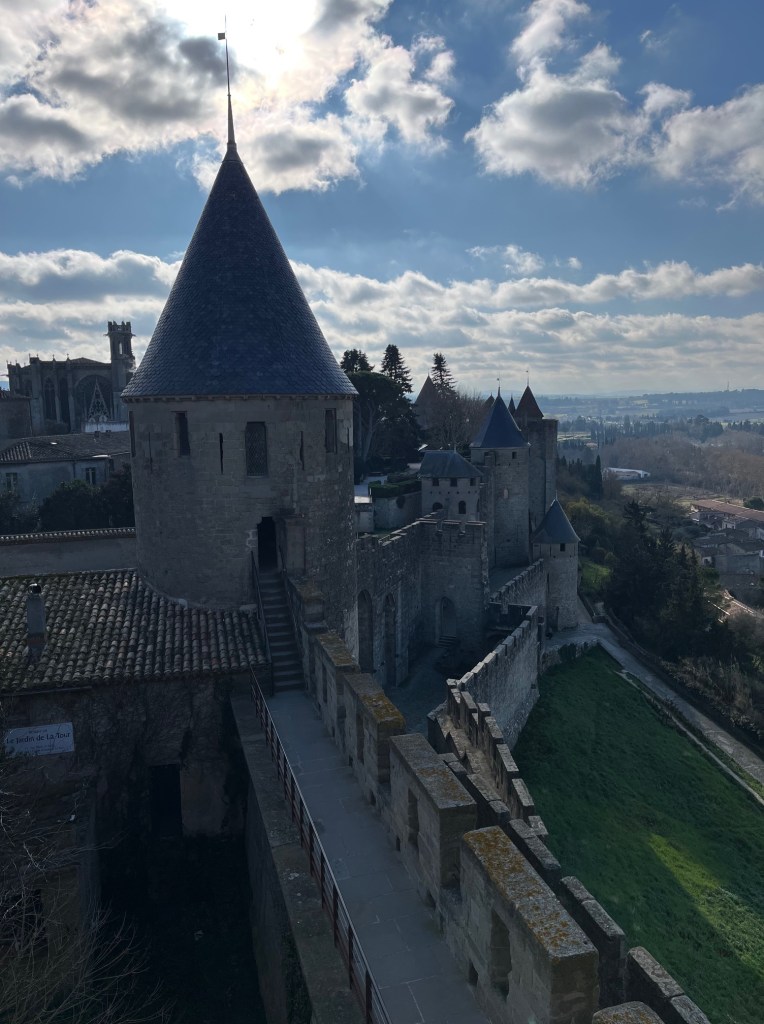
Entrance to the fort is free. Payment will be taken if you wish to stroll the ramparts, meander the castle and peruse the museum. We paid. And strolled, meandered and pursued. Fifty two towers, 2 concentric walls totalling about 3 kilometres. On a hill. Not a place to volunteer to attack after a lager top or two.
A audio commentary was available. We declined. However, fascinating fact boards dotted the ramparts and castle. All included an English translation. We read those.
Remarkedly, a small mediaeval town nestles within the protecting wall of La Cité. With a small population residing there year round.
We returned to Carcassonne new town and that attractive main square. Had coffee, cake, warmed up before heading back to Toulouse.
The day was completed by an evening excursion to Décapsule. It was my birthday.
Tuesday – Market and Paintings
Was Marché Victor Hugo day. The man, not the market, wrote, amongst others, those cheerful little ditties ‘Les Misérables’ and ‘Hunchback of Notre Dame’.
A market existed from when the square was originally constructed in 1827. In 1886 the square was renamed Victor Hugo and subsequently sexed up in 1892 and again in 1959.
Today Marché Victor Hugo is a large covered market sheltering around 100 stalls. Meat, poultry, fresh sea food and cheese assault the senses. With an almost apologetic concession to fresh fruit and vegetables.
Though smaller than London’s Borough Market the emphasis is on selling fresh quality produce to locals and tourists alike. Less on Borough Market’s street food vibe.
Several restaurants live on the second floor and take their ingredients directly from the market. Be rather silly not to.
We chose one, scoffed at one. I chose prawns. Big fuckers, unpeeled. It became messy. Quickly. The lovely staff kept arriving with napkins and wet wipes.
Overall, great value, good food, passable wine. A most agreeable experience.
I suspect the other second floor restaurants offer a similar experience. All have a lunch menu, most open around midday and close before 2pm.
Once foddered culture beckoned. Housed in the wonderful 16th century Hotel D’Assézat is the Georges Bemberg Collection. Once a private collection, since donated to Toulouse. Thanks Georges.
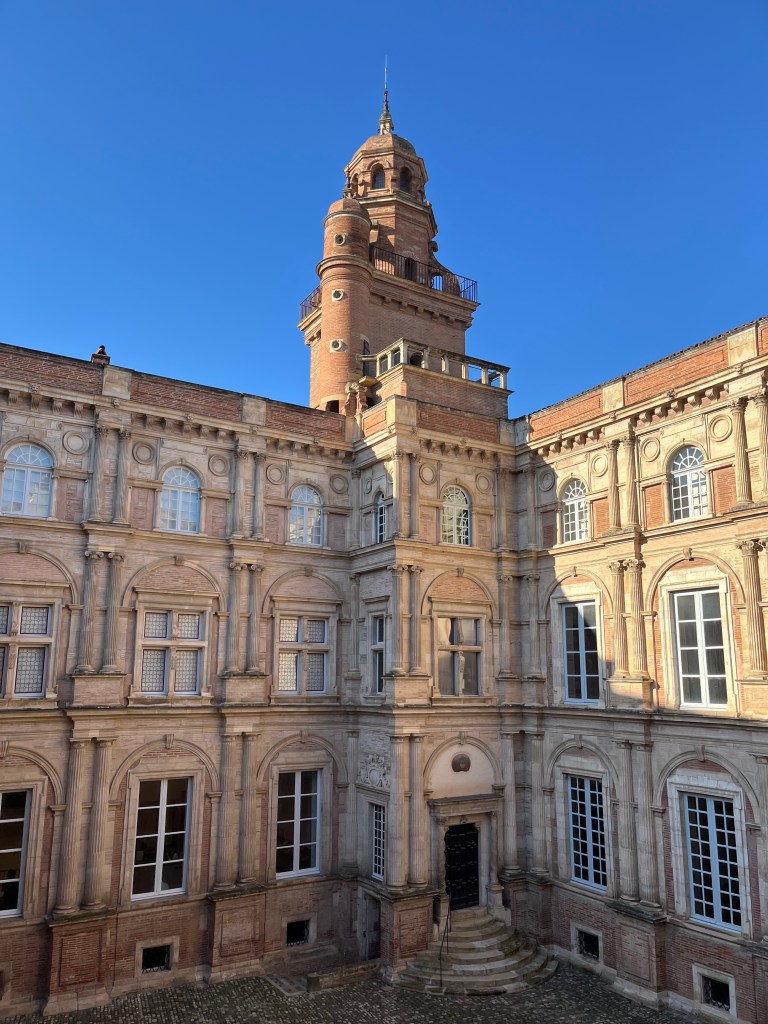
Daubs range from the Renaissance to the modern day and well worth a gander.
Popped back to hotel before a delightful evening supping fine wine at Nabuchodonosor. A genuinely lovely spot with welcoming locals. If you’re seeking a slick, modern, climate controlled environment this is not it. And there’s no sign. Nevertheless, please do pop in.
Wednesday – Foix
An hour and fifteen train minutes from Toulouse lies Foix, a charming town located at the crossroads of two rivers, the Ariège and the Arget. And snuggly nestled in the Pyrenees.
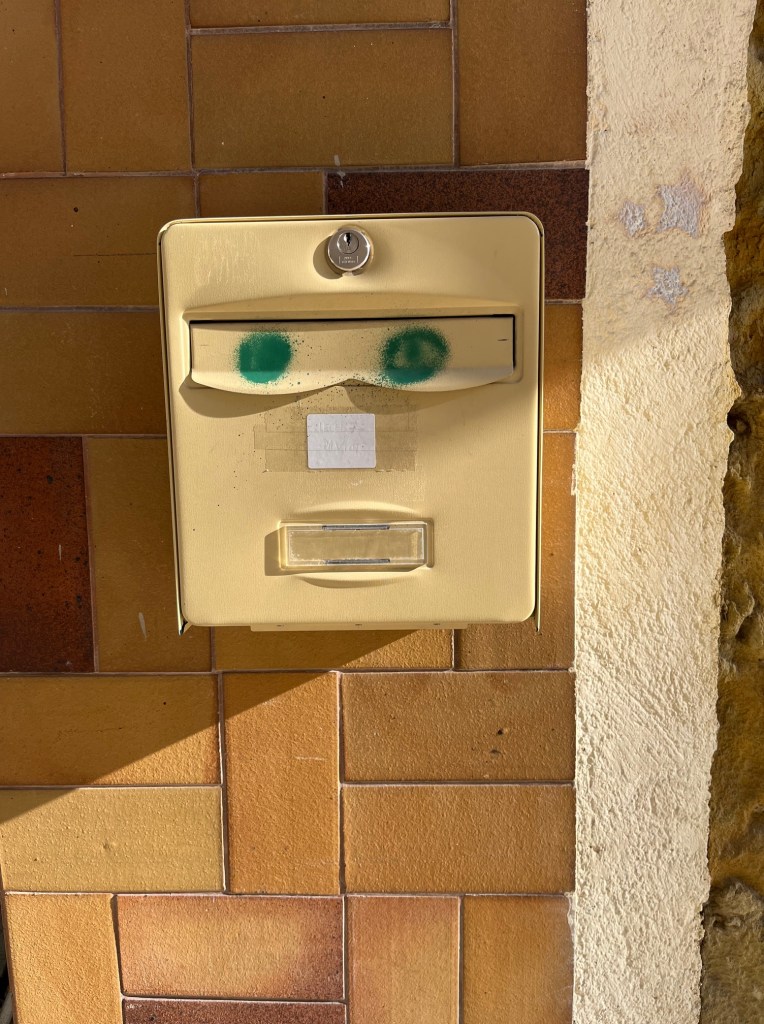
The train was a double decker. I love a double decker. Our tickets were never checked.
The journey passed through quickly forgotten small towns intermingled with pretty countryside backdropped by the Pyrenees and farms.
Foix, for a small town, boasts a disproportionately large castle and cathedral. The former medieval, the latter 15th century. We admired the castle from afar, closed for a nip and tuck, and peeked into the striking cathedral.
The town still retains a sprinkling of medieval houses, some half-timbered. Plus architecture from the following centuries.
Though not feeling especially prosperous the town woke up once the shops re-opened around 4pm. However, the Pyrenees setting, plus those 2 rivers, perhaps overshadow the town itself.
Thursday – Albi
Our third and final excursion was Albi, a UNESCO World Heritage Site.
An hour from Toulouse, the scenery again comprised of uninspiring outskirts, quickly forgotten small towns and pretty countryside.
More half-timbered medieval houses vie, for your attention, alongside Renaissance mansions. Woad, between the 14th to 17th centuries, was must have modern equivalent to the latest iPhone. It paid for those Renaissance mansions.
The historical centre comprised of houses and mansions predominantly between the 13th and 17th centuries. With approved guest appearances from later centuries. Many surviving mansions have been upcycled to hotels and civic buildings.
It’s a most agreeable place to meander and window shop. And buy cake. We grabbed a spot of lunch. Before the 2pm curfew.
Saint Cécile Cathedral, another of those Gothic masterpieces the French appear to be rather good at, is difficult to miss. It’s a monster. The daddy monster of cathedrals. Though, close up, vaguely reminiscent of Battersea Power Station.
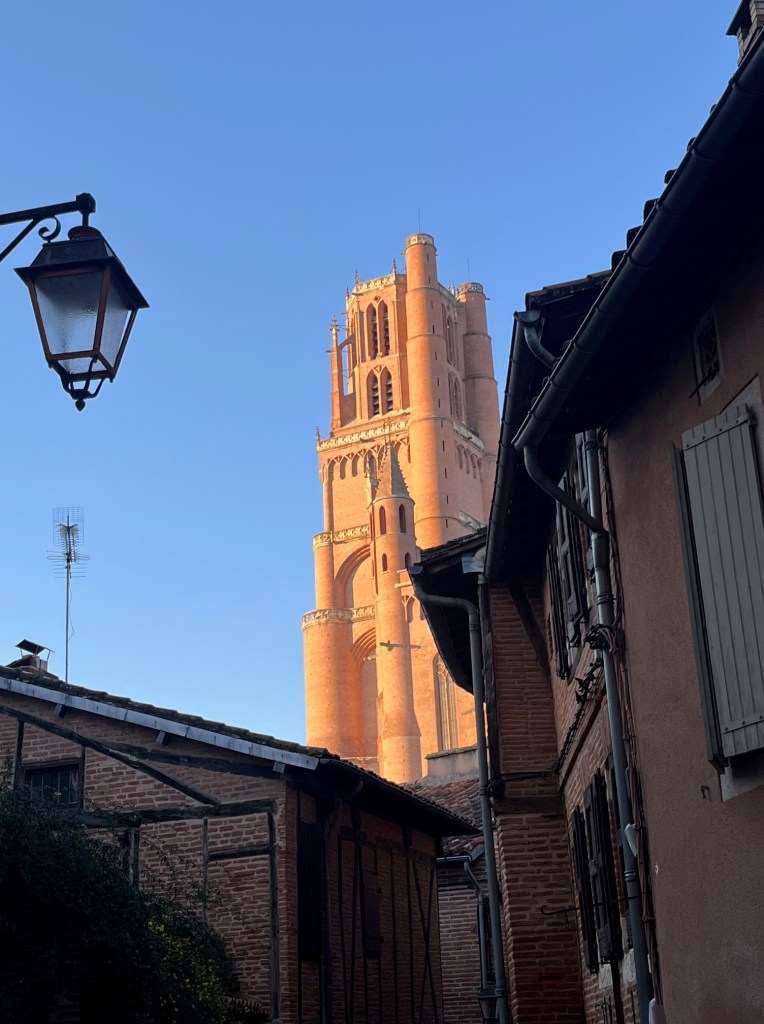
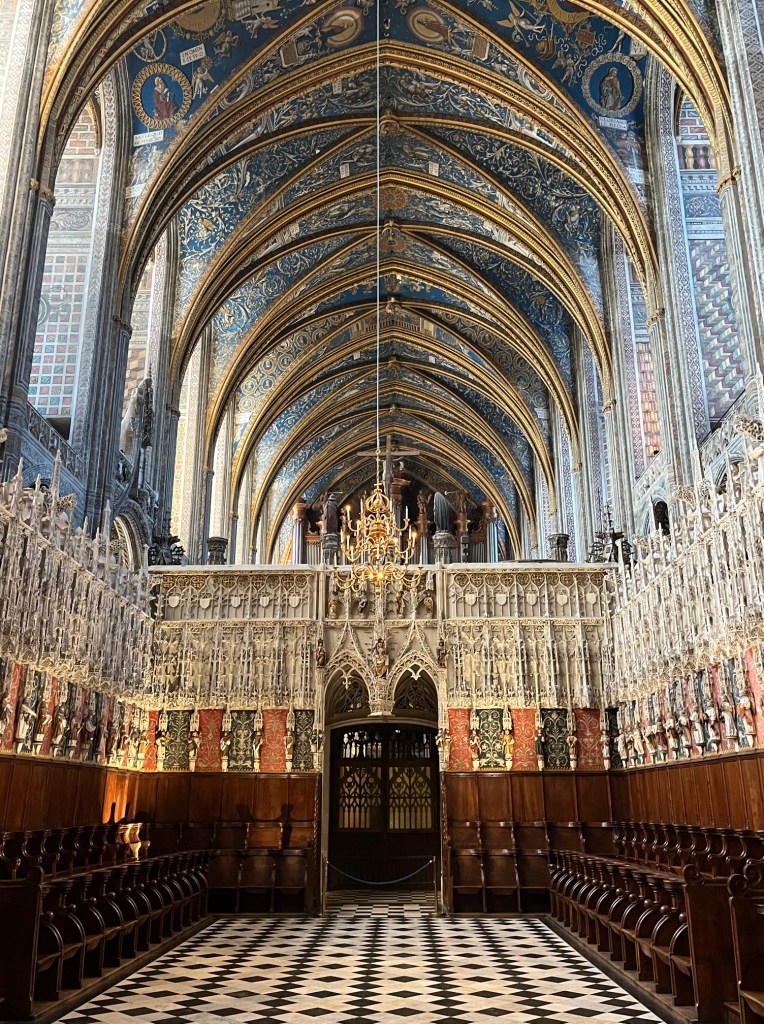
It’s huge, brick, with round bits. And turrets. Stunning. Inside, every wall, every ceiling is painted. One does hope the ceiling was double time.
Alongside is the equally huge, equally brick, equally round bits old Bishop’s Palace Fortress. Or the Palais de la Berbie. Now part museum, part not really sure.

We crossed one bridge, came back across another. My bladder discovered another beautifully medieval neighbourhood. We’d been following a ‘toilet’ sign. Good things really do come to those who wait.
Then back to the train station, onto a crowded train and into a cold Toulouse. And beer.
Friday – Michelin Birthday Nosh Day
Our last full day in Toulouse. And France. Before departing London we’d researched Michelin Toulouse restaurants. A 60th birthday is not a MacDonalds occasion.
To be fair, for us, nothing is ever a MacDonalds occasion.
Py-r is a 2 starred Michelin restaurant. Sus decided this was an appropriate destination for a milestone birthday. She was right. As she so often is.
Whilst pursuing the menu, with the help of google translate, the door was unlocked.
We entered. The manager looked a tad non plussed. Once reassured we knew this was a posh nosh establishment (my words, not his) and not the local pizza palace, he and his staff couldn’t have been friendlier.
We chose the shorter of the 2 set menus. And grateful we did.
As one would expect the food, presentation and ambience was fabulous.
The first course was ambiguously titled ‘Setting the scene’ or something similar. Some scene. Over 2 servings at least 15 dishes appeared, often elaborately exhibited. Only mouthfuls, but delicious mouthfuls. The French, apparently, very much enjoy understatement.
And there were 3 types of butter.
The wine, chosen by our rugby loving sommelier, was also rather fabulous.
Three hours later – we spent longer at the Fat Duck some years ago – it was time to leave. After paying of course.
The next couple of hours passed in a mild and pleasant food and alcohol trance exploring streets we hadn’t yet explored. Or, in some cases, actually had and just forgotten. That’s a 60 thing.
We ended up in Mosaic. A craft beer establishment. And a hop varietal. Our chosen wine bars were all closed until 6pm. It’s ironic, that in a country famed for wine, we ended up drinking beer.
Saturday – River an Canal Day
Our flight wasn’t until 8.30pm. After checking out we strolled to and the along the river Garonne. Joggers and walkers, like ourselves, were numerous. Saturday was the warmest day our Toulouse week. Not annoying. At at all.
Apparently, the Toulouse Massive likes to brunch and lunch on Saturdays. Cafes and restaurants were packed.
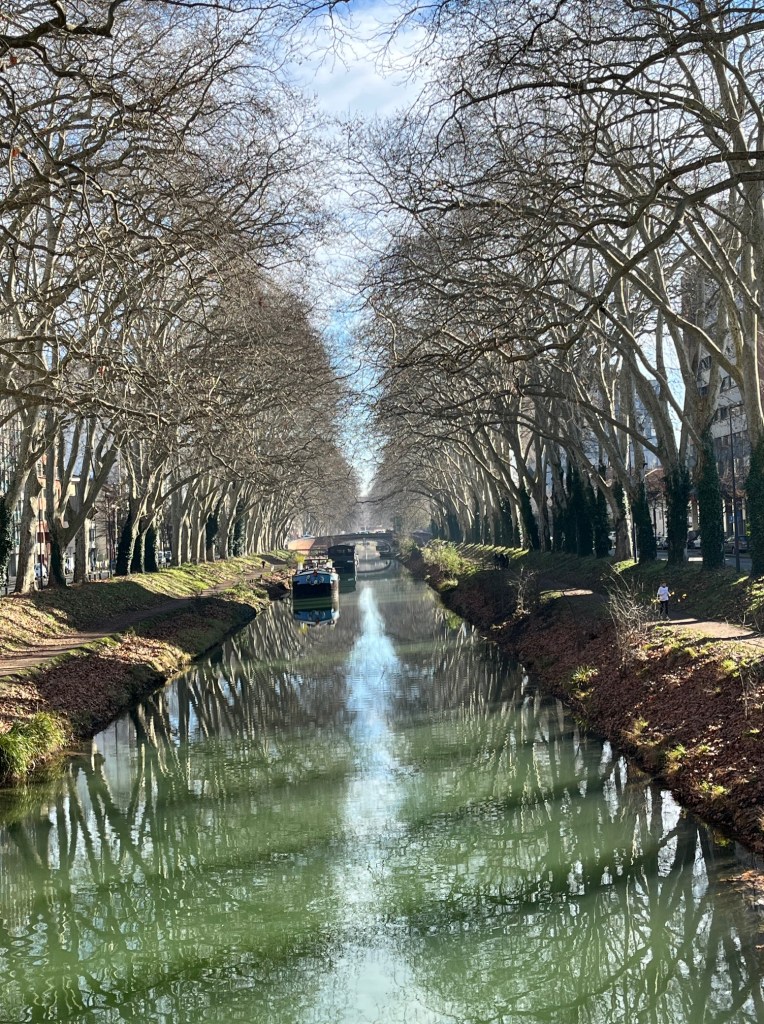
The Canal du Midi, flowing through Toulouse, was constructed in the late 17th century. Beginning inToulouse the canal ambles 240 kilometres finally gurgling out of existence in the Thau lagoon. Further canals were added a century later.
The couple of small sections we encountered were well maintained, respected and harbouring 20 species of fish. The Canal du Midi, and its later siblings, are a wonderful Toulouse bonus. As with the river, walkers were evading joggers, joggers were evading walkers. Cyclist were evading both.
We foraged fodder from a favourite patisserie, consumed back in our hotel’s comfortable foyer.
Then another stroll. More packed cafes and a graveyard showcasing many an impressive family tomb.
We can collected our bags and Ubered to a near empty airport. Our flight back to London was only a third full.
Toulouse Musings
Wrought iron is omnipresent. Handsome stuff. I’m a big fan. Perhaps my Steel City (Sheffield) upbringing.
We never actually ventured onto the metro. Our only foray into public transport was the airport bus on arrival. On the advice of hotel staff an Uber proved a more efficient, and cost effective option, for our return airport trip. Though, I believe, the T2 tram does run to the airport.
Pancakes/crepes are a Toulouse favourite. Not such a fan.
Graphic comic stores are well represented. Again, big fan.
When buying train tickets, online of face to face, specific trains must be chosen. And buy train tickets beforehand, even if only by a day or so. Same day travel fares are expensive.
Smoking is far more prevalent than in London. Vaping less so.
Sunday and Monday. That favourite researched restaurant, wine bar or cafe may well be closed.
Similarly, lunch and dinner restaurant opening hours are quite short. Try eating after 2pm may well leave you hungry.
Streets are a remarkable and welcome litter free. Unfortunately, poo de chien, is splattered somewhat more liberally.
Toulouse – Final Thoughts
Three days in Toulouse should prove a delightful break. Unless you live there. Obviously. Meander the city, amble Carmes, stroll the Canal du Midi and River Garonne.
If day trips play a part in your grand plan, Carcassonne should be projected managed in. As should Albi. Foix perhaps the unfortunate casualty to time. Our favourite? Albi. Plan several hours for each.
And a special mention must go to the vast majority of French people we encountered. Almost without fail they were charming, generous of their time and annoyingly quite lovely.
We both prefer Toulouse to the perennially overrated Paris. It’s beautiful in parts, charming in others and walkable in all. And would have no reservations about recommending the city to those wishing an alternative to Paris or, another favourite, Lyon.
Don’t sideline Toulouse in favour of another Paris visit. It would be a mistake. We loved it.
Many thanks for reading, Tony (February 2025)


 Tony's Travel Blog