I interrailed 40 years ago. Could say it felt just like yesterday. It doesn’t.
And so, partly due to 2, dick swinging morons indulging in and perpetuating a war no one wanted or needed, partly trialling a future longer trip and partly inspired by chum Mike, we found ourselves on a Eurostar one Saturday morning.
Plan was Cologne, Berlin, Warsaw, Vilnius and Riga staying between 2 and 4 nights in each. Trains, and one coach, depositing yours truly and wife into each chosen destination. Flight home. Otherwise, be still on our way back.
Trailfinders (TF) booked the trains and hotels, the rest was all us.
Eurostar can be expensive. Unless you’re able to book a decade in advance. Limited perhaps too in destinations. Nevertheless, for me certainly, fucks flying every time. Wonderfully civilised commencement to any continental journey.
And, what we didn’t grasp until we’d boarded, was TF upgrading our outward journey. A very pleasant purgatory between economy and first class. Entitling us to delectable breakfast pastries, yogurt and coffee.
COLOGNE
Arrival, Hotel, Wander
As one emerges from Köln Hauptbahnhof, Cologne Cathedral magnificently appears. It’s so close, a well judged stone could break a window. Please don’t.
Figured enough images of cathedral – which I couldn’t do justice to anyway – so instead, I give you a photo of train station.
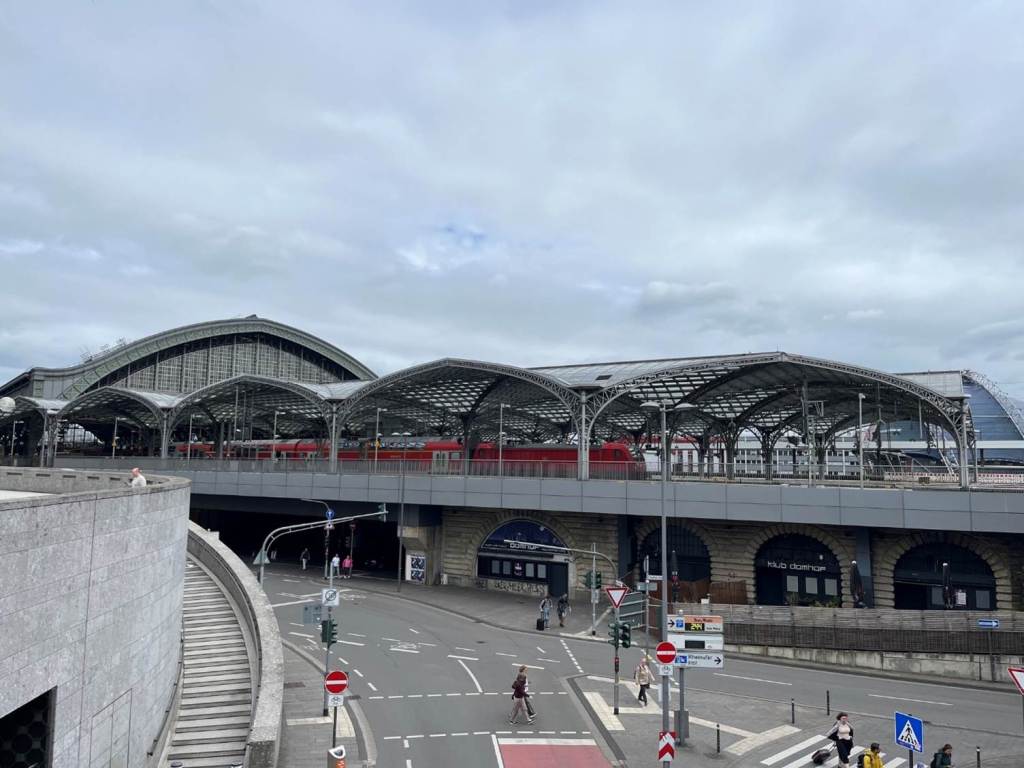
The hotel was only five minutes away, ten as we, thanks to one map app or another, took an unwanted detour. Checked in.
With mid-afternoon fast approaching, time to reconnoitre.
Tragically, for both inhabitants and their architecture, Cologne was heavily bombed during WW2.
The vast majority 15th to 17th century buildings were devastatingly destroyed leaving a mixture of survivors, reconstructions and post war buildings. Unfortunately, many of the latter are unworthy of the former.
Two large squares, both again central to the cathedral, and seemingly busy all day, offer restaurants and bars aplenty.
Walked, walked some more, carried on walking until chancing upon Rheinauhafen, 19th century docks transformed into a modern, upscale waterfront district. Museums, galleries, cafes, restaurants and modern architecture all cohabit reasonably happily. Fascinating and handsome. Give it a whirl. Glad we did.
Hotel, sleep for 9 hours.
Cologne Proper
Post a lovely and leisurely breakfast popped into the cathedral (free). Sunday Mass meant only a brief visit. However, returned later to properly gawp.
Huge with scoring gothic ceilings and gorgeous stain glass windows make an impressive statement. What bits are gothic gothic and what bits are mock gothic difficult to decipher. Nevertheless, worth a gander.
Behind the cathedral is the iconic Hohenzollern Bridge famed for its love lock multitudes. Constructed early in the 20th century it’s a vital railway bridge – 1,500 trains trundle across every day.
It also happens to be quite beautiful.
Once across the bridge and the Rhein one happens upon Köln Triangle. Comprising of a short stretch of riverfront, a short meander inland to the attractive Köln Messe/ Deutz train station (Deutz being the district) and completed by a return to the river via a viewing platform.
The latter, offering genuinely 360 degree vistas of the city, is housed in an office block 29 floors up. Striking vistas across the city, the Hohenzollern Bridge crossing the river is especially memorable.
Pay the €5 entrance fee, you won’t be disappointed.
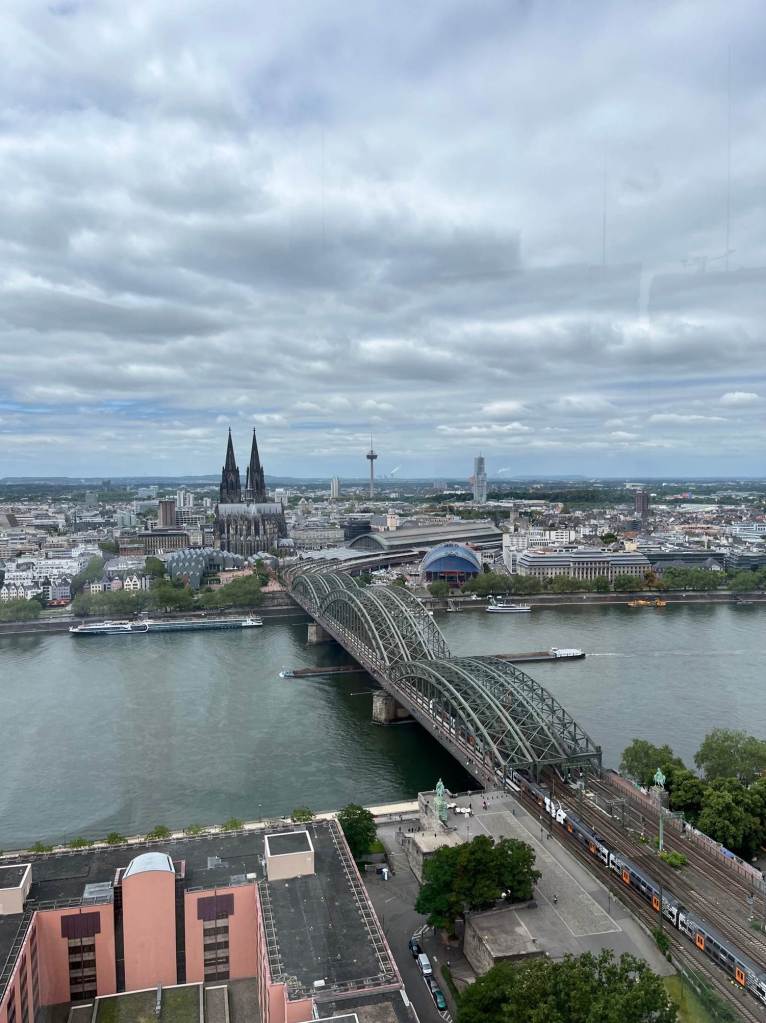
Those expecting the Köln Triangle to be a trendy food/vintage market (us) will be severely discouraged. It’s not. The viewing platform is a must, the rest easily and quickly forgotten.
This was nice though.
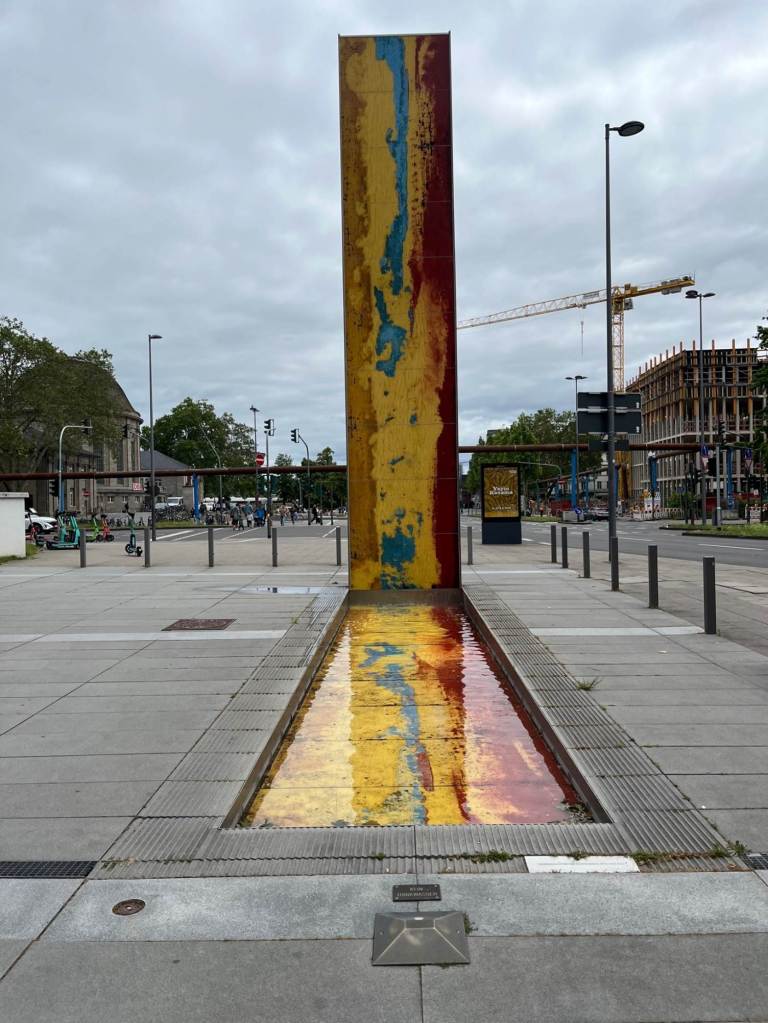
Cologne does offer ample opportunity to ramble along the river. It’s just not as attention grabbing as other cities, including our own.
The main shopping streets, close by the cathedral, are neither pretty nor ugly. Just meh. For those searching consumer therapy they will undoubtedly suffice.
One highlight was an Eau de Cologne shop. Surprising, as I’ve never taken to aftershave and Sus never to perfume. To put your minds at rest, both wear deodorant. It never occurred, probably due to a lack of interest, to put the city of Cologne together with Eau de Cologne. The dreadful, unimaginative, all the same ads for both don’t help.
Anyway, punters and voyeurs alike were able to sniff numerous perfumes and spray the occasional sample onto oneself. Or passerby. If particular hot.
Both were startled to discover liking many of said scents. Particularly the citrus forward fragrances. Undoubtably worth half an hour.
A second highlight was Sisu, a welcome pause for cake and coffee. The cake, homemade, was magnificent. A return a necessity if we hadn’t moved on.
Our final stop was the Tipsy Monk, a Delirium Cafe. Thirty taps of German, Belgian and UK beer treats. Beware if chosen tipple a stronger ale, no thirds available. Large and lovely inside, no outdoor seating we could see. Probably the reason place was near empty on our arrival.
The few surrounding streets (Salzgsss, Buttermark) reminiscent perhaps of earlier centuries. Atmospheric and worth a stroll even if beer isn’t your cup of La Trappe Dubbel.
Cologne Thoughts
If I’m honest Cologne was, unusually for a German city, disappointing. Standout sights include the cathedral, Hohenzollern Bridge and, my favourite, Rheinauhafen. And it’s certainly not grim or dangerous.
Impressions are of an underdeveloped and undervalued city. Perhaps someone important decided the cathedral was enough.
Nevertheless, if a spare day you find, I’d encourage all to afford the city a chance.
BERLIN
Arrival, Hackesche Höfe District
Late the following morning found us on an ICE train to Berlin. A 5 hour trip. A brief panic when our TF app showed no inclination to open denying access to our tickets. Mercifully, a very helpful chap at the station helpdesk, printed out a copy.
As with many a train journey the vistas consisted of various sized urbanisations, farmland and countryside. Agreeable in the main if not necessarily spectacular.
Quick shout out to our ICE train. Not quite Eurostar chic though perfectly pleasant. Reached speeds of 150 mph. Couldn’t tell. Sanitiser provided in the toilets. Classy. And we were in coach 31. Short platforms beware.
Berlin Train Station resembles a sci fi movie set. Multiple floors, multiple food outlets, people multitudes. Quite magnificent.
Unfortunately the whole sci fi analogy crumbles on entering the Berlin Metro. No tap in, tap out. We had to buy paper tickets and validate on entering and leaving the system. Seriously? This appears to be a common theme across German cities. I don’t doubt better options are available to residents but, certainly to us, appeared rather antiquated.
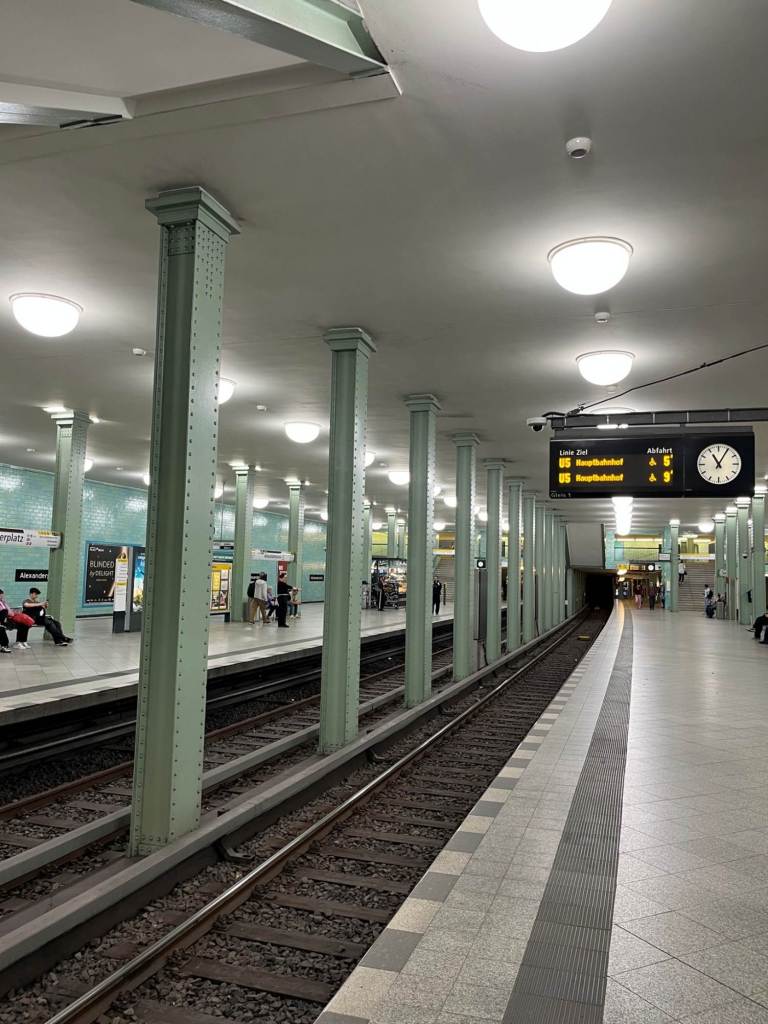
Alexanderplatz, location of our hotel, and once part of East Berlin, is a huge, sprawling square housing 2 of Berlin’s most iconic structures – the Weltzeituhr (368 metre TV tower) and Weltzeituhr (world time clock). Ironically, both were designed and constructed to celebrate soviet supremacy.
Surrounded now by modern office blocks, a large shopping mall, restaurants and bars, both may be feeling a little confused. Alexanderplatz is also a major transport hub (ideal for tourists) and the core of modern East Berlin.
Checked into hotel before strolling to the Hackesche Höfe district.
With its generous sprinkling of Art Nouveau architecture, upmarket consumer consumerism, all manner of interesting bars and restaurants, it’s rather charming. Even those establishments trying for gritty and real. The original Jewish quarter was especially attractive.
Once foddered, we meandered the 15 minutes to Mikkeller Berlin. Though increasingly residential, the character of the district remained remarkably similar.
Twenty four taps, predominantly their own, inside and outside bottom perching. Sus grabbed bench space outside overlooking an agreeable thoroughfare. Sipped, people ogled, struck up a conversation with a delightful Brazilian couple living in Germany.
A delightfully charming evening.
BERLIN II – Oranienburger, Friedrichshain District
Slept long, breakfasted long, emerged from our hotel a little before 11 am.
Sus fancied the David Hasselhoff Museum. I didn’t. I lost.
Located a few minutes beyond the Mikkeller bar and housed in what appeared to be an upscale hostel with its own brewery. Apparently, hostels are not immune to gentrification.
Mercifully, the ‘exhibition’ was tiny in a space no larger than a en-suite commode. Couple of signed photos were the ‘highlight’. Free. Thankfully.
An engineered (Sus, obviously) meander via the charming and delightful, predominately residential, Oranienburger district brought us to the thoroughfare that is Unter den Linden. Sober, or otherwise, I struggled not to rename the street after a deceased Middle Eastern terrorist.
The Brandenburg Gate sits on Unter den Linden. Unfortunately, or at least the section we wandered, was deeply disappointing. Glance at the Brandenburg Gate, explore elsewhere. We did.
Jumped on the metro, alighted at Frankfurter Tor, for the Friedrichshain District. This mundane residential district, albeit boasting a splattering of Art Nouveau architecture, has somewhat and miraculously morphed.
Independent shops, restaurants and bars dominate. Gentrification has arrived. Nearer the river, a light industrial estate, has cleverly transitioned into galleries, bars and techno clubs. And graffiti. Lots of graffiti.
One group of long, long ago retirees were exploring (slowly) this once industrial landscape. Gentrification. Literally.
And we loved it. I hope you do too.
We continued our quest to see the Spree. A river not shopping mall.
Once discovered (and conquered, obviously) we crossed the mock medieval Oberbaum Bridge into the district of Kreuzberg.
Not dissimilar to Friedrichshain, with that same mixture of surprisingly attractive Soviet era blocks and Art Nouveau, though perhaps a smidgen more upmarket.
More metro madness – actually rather ordinary, just wanted the alliteration – to Kottbusser Tor. Basically a more Holloway, less Mayfair snippet of Kreuzberg.
The reason, Biererei Bar and Vintage Cellar. Obviously.
Indoor, outdoor plonking places, 24 taps of quality ales (German, UK, USA). Lovely. The cellar, in reality a cooled, glass enclosed room, stocked some fabulous beers. Unfortunately, prices are equally fabulous.
Both have previously visited Berlin. Both a couple of times. With tourist attractions long since ticked off an opportunity beckoned to better explore East Berlin.
Yes, gentrification is endemic certainly in districts we visited. As with other cities, where gentrification has taken hold, we believe, and hope, it offers more than it takes. I suspect most would to prefer to live in the new Friedrichshain than the old. Unless you’re buying a house of course.
And, for those searching for grittiness, realism, it’s still all here. Just packed a little differently.
Berlin is a proper city, an easy city to live in. We’re dedicated urbanites and loved it.
WARSAW
A new country for Sus, a new city for both. Relaxed breakfast before Berlin Hauptbahnhof and platform 11. Another 5 hour train journey.
Podcasts, music, window watching, blog binges all helped time dissipate quickly. Noise cancelling headphones blocked out undesirables. Aren’t they fab? Both recently invested in a pair of Sony noise cancelling, over ear headphones.
The train, or at least our carriage, had compartments each with 6 seats. Brought memories of travelling to and from SE London into the city many years ago. Nevertheless, clean, air conditioning and reasonably comfortable. And we had one of those 6 seats compartments to ourselves.
Arrived, dragged suitcases the short distance to our hotel, checked in. And, did our usual, quickly departing to explore.
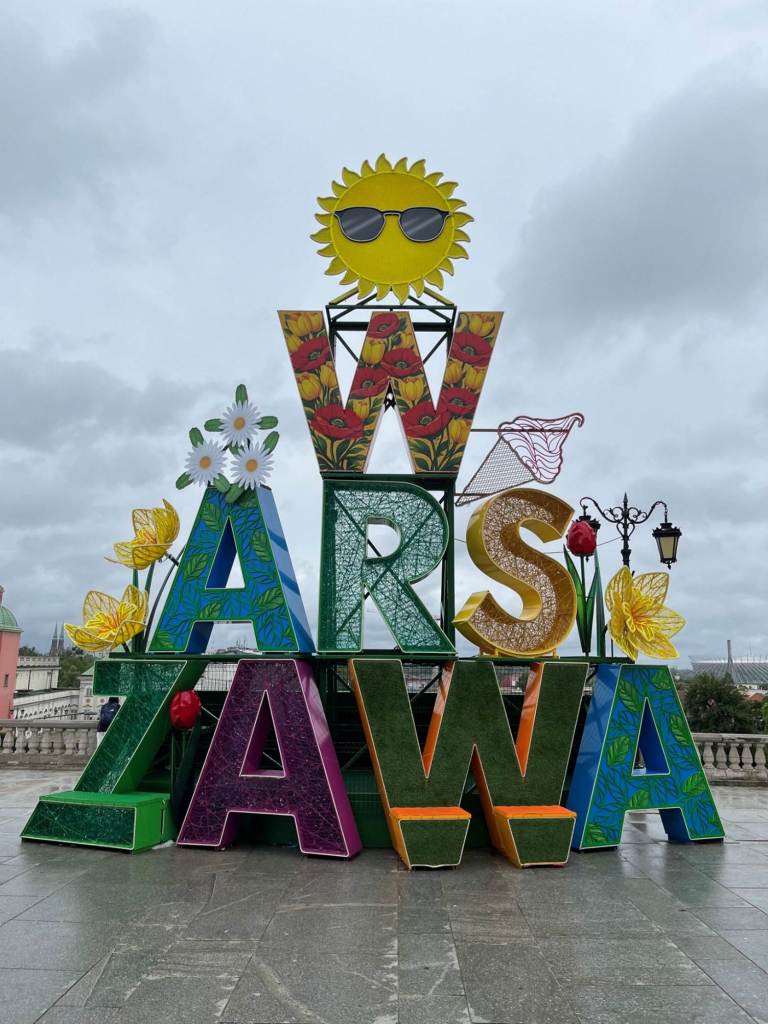
We were half heartedly aiming for old town. That lack of commitment doomed us to failure. Nevertheless, we meandered down the elegant Wilcza lined with boutique shops, restaurants and bars. And trees.
Architecturally resembling East Berlin with that odd but effective mix of soviet era blocks and Art Nouveau loveliness. More tree lined goodness in the shape of the boulevardesque Marszalkowska and completed our sojourn on the Wilcza resembling Poznańska.
Spellcheck is losing the will to live.
Sus, quite deliberately, had brought us to Warsaw’s Central Square bordering, on one side, the modern train station. From which we’d emerged a couple of hours earlier. Events are obviously staged here – one now forgotten something was in its dismantling death throes.
A collection of Romanesque buildings, plus a magnificent beast seemingly paying homage to New York’s iconic Empire State Building, host galleries, museums and a theatre.
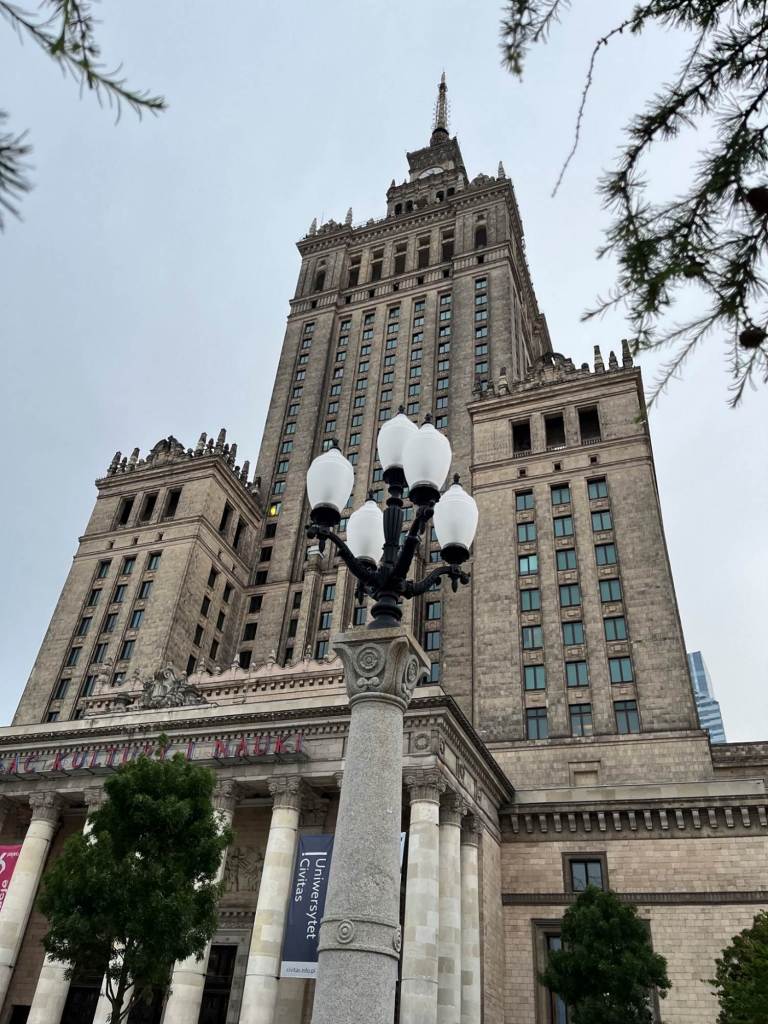
This striking architectural collection was constructed in the 1950s by Poland’s Russian overseers. Odd, perhaps telling, the architect mimicked such an iconic American building. And handsome to you and us perhaps, these structures are a symbol of Soviet repression and disliked by many residents.
Modern skyscrapers, some quite striking, dominate the skyline. For those not on foot, Warszawa Śródmieście (city centre) metro station, delivers tourists and locals into the centre of said square.
With the weather misbehaving a return to our hotel felt opportune.
Warsaw – The Old Bits
Post brekkie, via tourist information, a cold wind and occasional rain, we bravely braved the walk to the old town. Between 20 and 30 minutes, depending on route and coffee and cake intake, from the central train station.
We actually landed on the ‘Royal Route’. Which, rather conveniently, wanders into the old town. The Royal Route dates back to the 17 and 18th centuries, the old town itself from the late medieval period.
Tragically, the Nazis, partly in an act of spite, destroyed 85% of this historical architecture. Inhabitants, supported by the country as a whole, meticulously rebuilt the historical centre, beginning from 1945, and over several years.
And, as with Nuremberg, the decision to do so was an undoubted success. Yes, many of the buildings appear newer than they should, nevertheless, there is a welcome level of authenticity.
Unlike Dubrovnik. Disneyland on a stick. With cruise ships.
Meandered contentedly for 2-3 hours before returning, by bus, to the central station. A short stroll brought us to Beer and Bones. Heavy metal and craft beer. That works. Was a big metal fan in my youth and, though my tastes have broadened, still love the rasp and shriek of a guitar.
Twenty four taps of almost exclusively Polish beer from lager to lethal IPAs and sours. Again, be warned, 300ml is the smallest pour. Interior is as expected (neither pink, nor Disney inspired cushions adorned) with numerous seating options. Limited outdoor seating complements indoor space.
Rested, showered before meeting a Polish colleague of Sus’s, and his wife, for dinner. And a delightful evening it was to prove.
Warsaw – Praga and Lazienki Park
So delightful we slept in to well after 9am. After breakfast headed to Praga, an artsy district of Warsaw.
The M2 metro, alighting at Dworzec Wilénski brings one close. Head to Ząbkowska Street or Stalowa Street.
And may I point you towards Konesar. A former 19th century former vodka distillery, with many of the original booze buildings surviving. Enhanced with modern, and rather handsome buildings, the complex hosts galleries, museums, shopping, bars and restaurants. It’s most impressive.
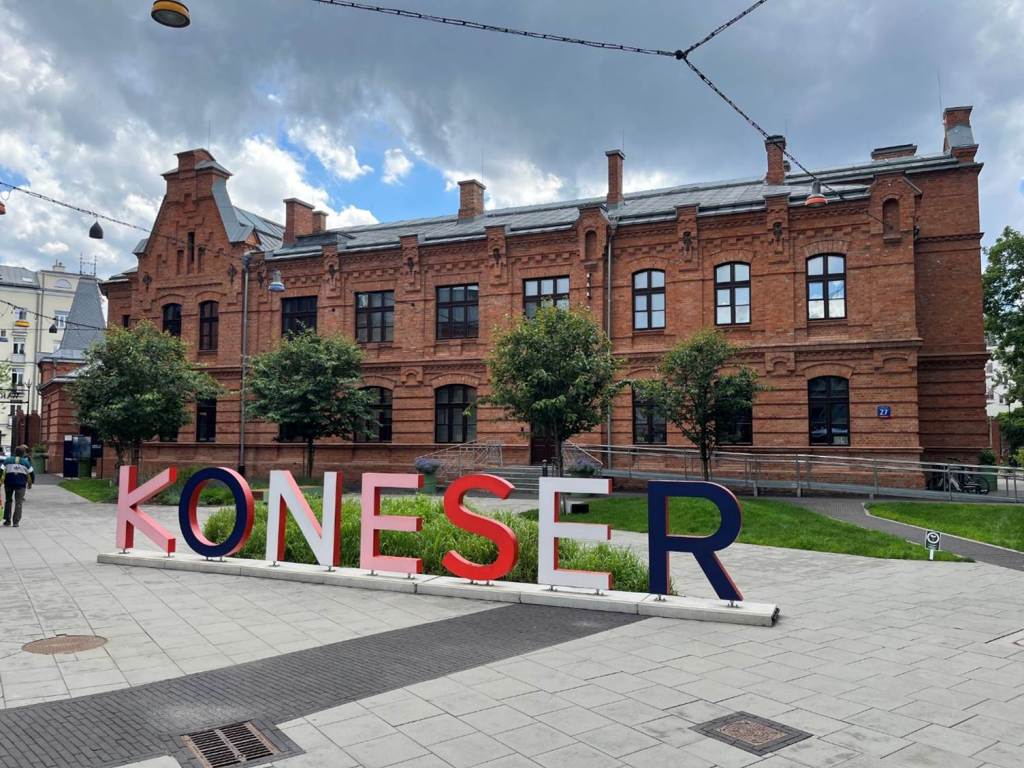
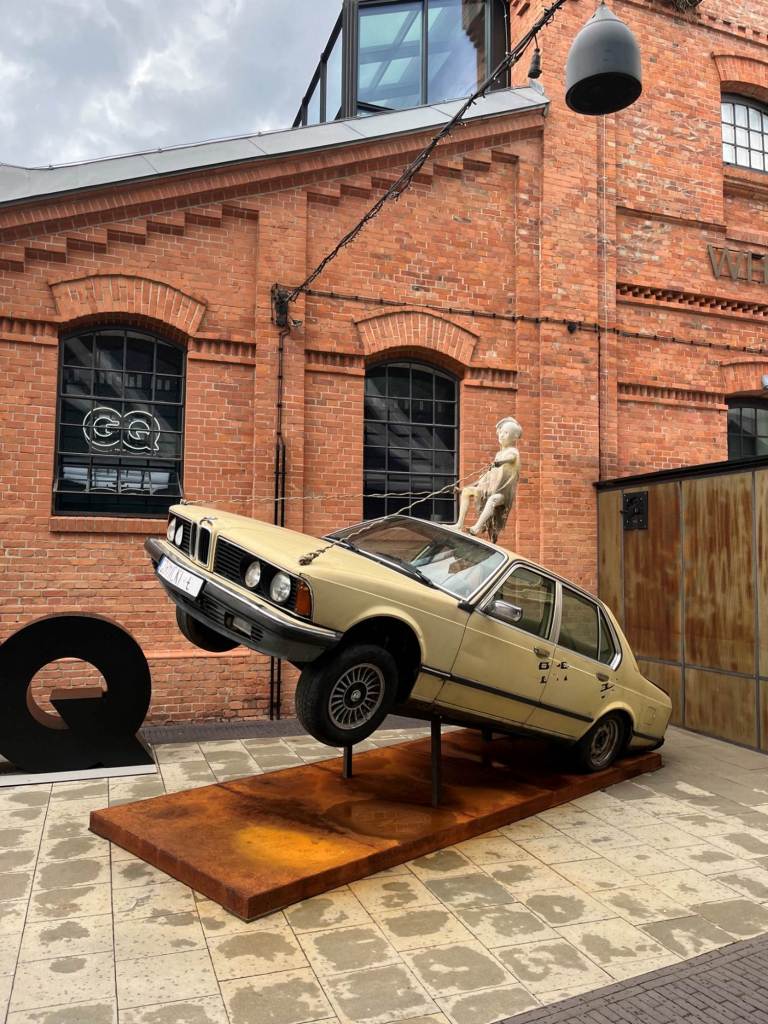
Less impressive, perhaps, is Ząbkowska Street. Towards one end mildly trendy bars and restaurants have sprung up but the rest of the street is a tad nondescript.
A 162 bus safely delivered us to Lazienki Park. Alight at Agrykola. Lazienki Park is large, green with numerous follies and one palace. Water is strategically plonked.
Meandering proved a pleasing way to spend a couple of hours. Or more.
Warsaw has, from our limited experience, a comprehensive, cheap and effective public transport system There’s no tap on, tap off but ticketing machines at train and metro stations are straightforward to use.
Similarly bus tickets though you may have to pay using onboard ticket machines. Not all bus stops have machines. We bought per journey though better value options, for public transport lovers, are doubtless available.
Tomorrow, is 7 hour train journey day. Earlyish start so treated ourselves to take out pizza, beer and laundry. We know how to mix it up.
Warsaw, or the bits glimpsed, genuinely surprised us. Neither, initially undoubtedly, knew what to expect from this once soviet suppressed city.
Those expecting grim tower blocks, cars from previous eras and bread queues will be genuinely surprised. Or disappointed. Depending on your outlook. Warsaw is an ultra modern, attractive city, striving to lose any vestiges of soviet oppression. It’s working.
One very much feels Warsaw (and presumably Poland) is striving to rid itself of any vestige of Soviet repression and move closer, certainly with the current government, to its European neighbours.
I wish it every success.
VILNIUS
Up, breakfasted, checked out by 8.15. Again in compartments of 6 though conventional carriages existed. Odd.
Initially started our journey in adjacent compartments until a kind, English speaking lady, offered Sus seat opposite me. Their eldest daughter – they were a family of 5 – had a job interview and unable to come.
One small fact I hadn’t been aware of, until Sus pointed it out, was a train change at the border. About 5 hours into the 7. Differing track gauges, apparently. It actually decoupled twice with one change of direction whilst still in Poland.
Vistas again comprised of variably sized urbanisations, farmland (mainly arable) and wooded slopes. An attractive threesome.
Lithuania appeared similar, not surprisingly. Borders are a human thing, not a tree thing. There was perhaps more woodland, less farmland with the larger urbanisations retaining greater remnants of their Russian subjugation.
And both noticed second (third? Fourth?) growth trees. Many were, presumably, fast growing conifers. Apparently, Lithuania has a strong tradition chopping down trees, flogging trees, replanting trees. Logging.
A short bus ride – tap in enabled – followed by a short walk brought us to our fourth temporary home of the trip.
Checked in, yep straight out. Discovered Baltas Tiltas Food Hall. Along with much of Vilnius. Indoor/outdoor seating, bar plus several food outlets. Greenery and river nearby. Food passable, value decent.
Post fodder, calorie depleting stroll. It started to rain. Obviously.
Strolled around modern district, purchased chocolate, headed back to hotel. Rain had mutated from irritating to just wet.
Vilnius – Seven and a Half Mile Day
Post a most palatable breakfast departed hotel to explore the city.
Unlike Warsaw Vilnius old town has been, mercifully, well preserved. UNESCO recognises as a World Heritage Site.
Multiple invaders inevitably caused partial destruction of the city. Nevertheless, Baroque, Gothic, Renaissance and classical architecture all survived. Hoorah.
We meandered here, we meandered there. A vague plan, oft deviated. Seven and a half miles of oft deviating.
Vilnius does churches. If churches are your cup of ecclesiastical, Baroque your cup of architecture, you may never leave. St Anne’s and Bernadine Churches are amongst the most beautiful.
Secular treats include the Bernadine Garden, Vilnius University, Palace of Grand Dukes, Presidential Palace, Town Hall and the evocatively named Gates of Dawn.
Wandered into the Presidential Palace Courtyard, an agreeable space in its own right. And a captivating dancing fountain. Pop by, say hello.
The self proclaimed Republic of Užupis is a mildly bohemian oddity and worth the short detour. Though a Vilnius district, Užupis leaves the impression of a small, well to do market town.
Litaratų Street is also mentioned in many a guide. We took a stroll down and not sure why. Remarkably similar to numerous other streets.
A relatively, benign climb brings one to The Bastian of the Defense. Constructed in the 16th century, it’s since been fully restored. The afore mentioned Gates of Dawn are the only original surviving section. The walls are visible though a museum, not visited by us, does greater justice to the history of said Bastian.
Additionally, the neighbourhood boasts a convent, pink church and expensive looking apartments.
Gediminas Tower, easily visible from the old town, is the last remnant of Vilnius’ Medieval Castle. We declined the climb.
Four pm arrived. Thankfully, so did Nisha Craft Capital. Indoor/outdoor seating, rock music, 22 taps plus fridges. Perfect.
Trakai – A castle, a lake and rain
Breakfast, bus back to the train station. This time without suitcases. That’s tomorrow.
Today it’s Lake Galvé and Trakai Castle. Today was also torrential torrent day. Trees and porches became our friends. Ducks wore ponchos.
Train journey is 35 mins, then a relaxed 45 minute stroll around Lake Galvé.
The final short stretch takes castle hunters away from the lake and into the attractive, predominantly clapboard village of Trakai. Signposted back onto the lake where stalls, restaurants and cafes await. None appealed. Many wares were landfill in waiting.
Two bridges separate tourists from the island Trakai Castle lives on. A 14th century, gothic fortress. Unfortunately falling into ruin in the 17th century the castle has since been reconstructed.
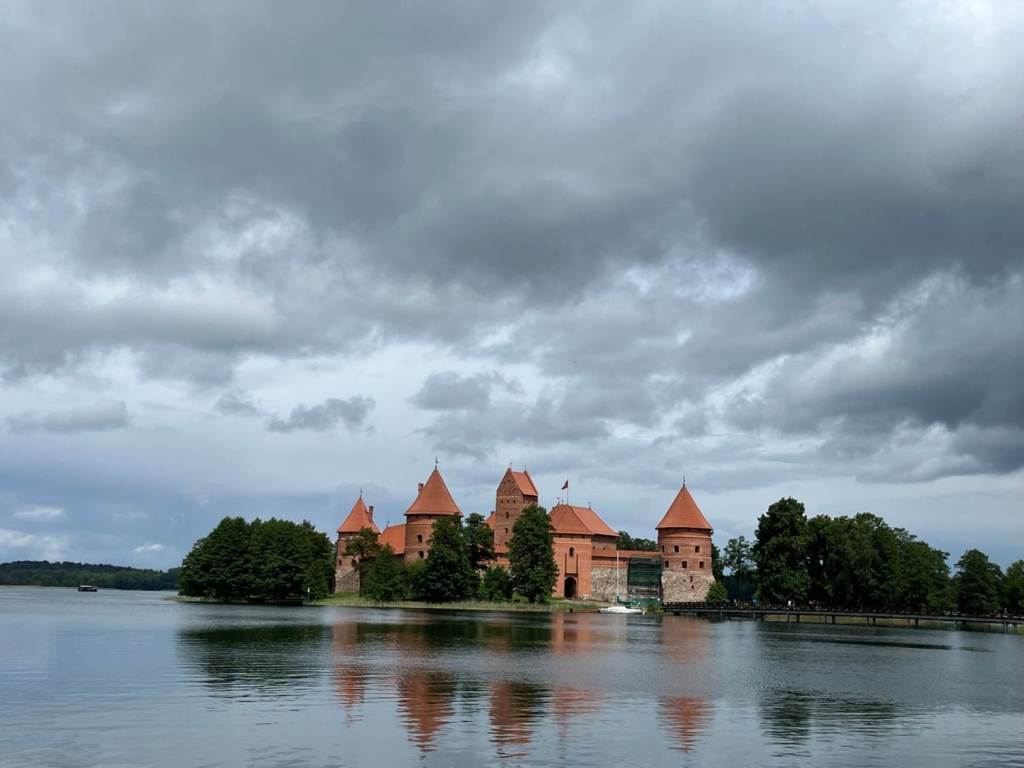
And it shows. And only having recently toured Nuremberg’s reconstructed castle Trakai Castle didn’t appeal. The €14 entrance, though understandable, sealed the castle’s fate.
Strolled around the castle returning to Trakai village and Kyby Nlar. Surrounded by a Japanese tour group (today Lithuania, tomorrow France) ordered coffee and Kibinai. Both excellent.
The kibinai is remarkably similar to the empanada which is remarkably similar to a Cornish pasty. Evolution or plagiarism?
One oddity was a large, again reconstructed, wall, adorned with small defensive towers, enclosing a several football pitches sized area. Though located between Trakai village and the lake we saw no signposting, information boards or otherwise explaining what had appeared in front of us.
Bizarre.
Anyway, Lake Galvé is glorious, Trakai village fascinating, Trakai Castle more miss than hit.
We’d caught the 11.36 train returning on the 16.10 train. Specific trains need to be chosen before travel. As mentioned, the castle wasn’t our cup of reconstruction.
However, if it is, I suspect the same trains will suffice. Cost, €6 return.
Once returned to Vilnius we opted to stroll the 25 minutes to a food hall spotted the previous afternoon. Closed. This being a Monday. Monday is the ideal day to traipse to a favourite restaurant or bar. Doors may not open until Tuesday.
Finally foddered, sipped some fine wine at PODS Wine bar. Worth a look if in mood for the fermented grape stuff.
Returned to hotel, packed, slept.
Vilnius Thoughts
Vilnius felt incredibly modern, young and efficient. And is undoubtably one of the cleanest cities ever visited. This, from my train widow watching, appeared to include the country as a whole. Love it.
Locals, though not especially ethically diverse, appear helpful and friendly. Both loved it, an easily recommendable 3 full days stopover for anyone.
RIGA
There’s only one daily train from Vilnius to Riga. It leaves as 7.30am. Never going to happen.
Alternatively, coaches leave throughout the day taking about half an hour longer (4.45 hours). Line up that leisurely breakfast.
We booked (ok, Sus did) a LUX express taking, in theory, four and a quarter hours. Only a smidgen longer than the train. Similarly priced at €25 though cheaper coach options are available. We chose an express service, only stopping once with a little more luxury. And I mean a little more.
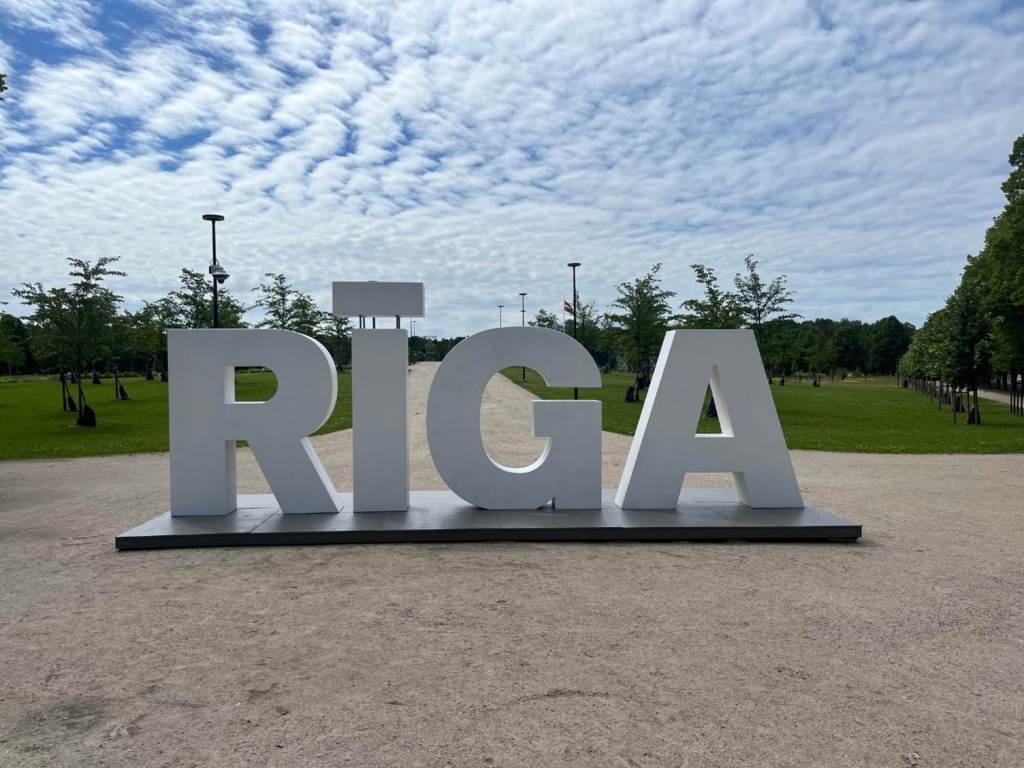
Vilnius train station is modern, clean with a small variety of eateries. The coach station – visible from train station – feels like a throwback to an earlier era.
I rarely travel by coach though always remember Victoria Coach Station seemingly scruffier than its train counterpart. Is this universal or only my perception? Are coach stations, railways stations’ poorer cousins?
Our route out of Vilnius drove through attractive neighbourhoods. One small district consisted of 18th and 19th century wooden houses. Riga would have similar such buildings.
Arrived slightly early into Riga bus station. We were never to set foot, or any other part of our
body, into Riga central train station, so my research will need to be continued elsewhere. Now, that’s a cliffhanger.
Walked to our hotel, checked in, left for Old Town (Vecrīga) exploration. Another UNESCO World Heritage site.
The cobbled streets and medieval layout have largely survived wars and Russian occupation. Unfortunately, much of the medieval centre succumbed to time and the vagaries of humankind and underwent extensive reconstruction post-independence.
Nevertheless, medieval remnants do still survive – The ‘Three Brothers’ houses, Riga Dome, Gunpowder Tower and Riga Castle.
Tragically, late, late night bars, vape and tacky souvenir shops dominate parts of the old town. Nearby restaurants, offering similarly touristy menus, do nothing to inspire. It’s somewhat incongruous. Beautiful buildings, from throughout the ages, garishly vying for your money.
Or, perhaps, just a return to their origin story.
Whatever, it’s a tad grim. Unless 50 shots for €25 is your cup of evening entertainment. Stag and hen groups may, however, be wooed.
A second ring beyond the old town showcases 18th and 19th century elegance. Miraculously, a sprinkling of wooden houses survive alongside numerous art nouveau structures.
A large park prettily sits beyond this elegance offering tranquillity and green vibes.
We ate (vegan) in an agreeable neighbourhood the other side of the park before retiring to our hotel.
Riga – Art Nouveau and Central Market
Both emerged from the land of slumber unexpectedly late. Breakfast, showers, left the hotel about midday. We returned 9 hours and 8 and a half miles later.
Much of Riga, outside the old town, showcases late nineteenth and early twentieth century elegance with Elizabetes Iela and Alberta Iela the pinnacle of Riga’s Art Nouveau architecture.
I actually prefer the simplicity of Art Deco but there’s no denying the gorgeousness of these 2 small streets.
Accidentally discovered Dzirnavu Iela, an attractive main thoroughfare. Unlike old town, tempting eateries are commonplace. Aleksandra Čaka Iela, more main thoroughfare pleasantness, herded us agreeably to old town.
Average coffee and cake prior to Riga’s huge central market (Rīgas Centrāltirgus). Five pavilions (imaginatively repurposed 1920s Zeppelin Hangers) house fresh produce including meat, fruit, vegetables and fish.
Ubiquitous landfill wares are also available.
In case you’re struggling to find that perfect gift/ingredient there’s an outdoor market. Fresh flowers (popular in Latvia), fruit and vegetables dominate. Numerous food stalls dominate one half of one hanger offering local delicacies to hungry tourists and locals alike. Dinner sorted. Twice.
Neither can remember a larger market. Wikipedia also appears to be struggling.
Ms&Mr Beer was our beer destination of choice. Though small inside, it’s marvellously imaginative. Outside seating is additionally available.
Eight taps and numerous bottles handily listed on a menu. Rock music on repeat. Lamentably, the beer was a bit rubbish. Sus, discretely (ish), poured a quarter of hers into the road. Never a recommendation.
Little point in staying – the bottles and cans were of a similar quality (I checked) – and so we didn’t.
Walked to BEERA Bar. Twelve taps, fridges full of beer. A huge improvement. We stayed.
Riga – Chum Gary
Post brekkie, a stroll across the Daugava River, at least twice the width of the Thames.
After mild map confusion we found ourselves in the Kalnciema Quarter. Agreeable, mildly upmarket with restored and, hopefully, soon to be restored wooden/clapboard buildings.
One map app finally directed us to the small square we’d been seeking. Pleasant, but suspiciously quiet. No market, no live music. That would be later. About 5 hours later. Didn’t hang around.
Kalnciema sported a middle income ambience. Agreeable if not spectacular.
Rested briefly before heading to Āgenskalns, another obscure website, recommended neighbourhood. We genuinely had no idea what to expect. Nevertheless, agreeably surprised. Not a market, not another overly ornate building. But a small neighbourhood of predominantly late 19th, early 20th century wooden/clapboard dwellings.
Many had obviously been restored, others were in the process of restoration, a few awaiting benevolent new owners. Shared a commune vibe but really wasn’t. A community yes, a commune no. If a day to many booked in Riga, Āgenskalns would be a worthy diversion.
Victory Park, a ridiculously short stroll from the ‘not a commune’, offers lush tranquility.
Another ornate bridge – Riga has a number – brought a short respite back at the hotel.
A return to Central Market to eat and meet chum Gary. Frustratingly, Gary doesn’t own a smartphone so only caught up with him at BEERA Bar a couple of hours later. With the kind help and intervention of one of Sus’s bestest chums.
Jurmala Beach and Dzintari Forest Park
On checking in the lovely receptionist suggested, as an excursion, Jurmala Beach. Three days later we confirmed details with a second lovely receptionist. She suggested a small deviation. She suggested alighting train at Dzintari, one station stop before Majori, the stop for Jurmala Beach.
Genius.
Train station, return tickets (no need to specify return train) easily purchased from ticket desk, train departed quickly thereafter.
Cost? A meagre €10 for both. Journey time, half an hour.
Dzintari Forest Park offers towering pines, a skateboard park and a seemingly non ending Tarzan (rope) adventure park. Clean toilets (sampled), a café (not sampled) with further attractions speckle the park. Additionally, a viewing tower exists within the park. Unfortunately, we never viewed said viewing tower.
For a relatively small space Dzintari Forest Park is genuinely remarkable. A fabulous resource for children, and to a lesser degree, their parents. Dzintari appears to be a wealthy area. Such a resource is unlike to appear in lower income city districts. Which is a shame.
A stroll down Jūras iela for a consumerism hit, predominantly restaurants and shops.
In fairness, it’s all rather agreeable. A wide, pedestrian thoroughfare bordered by handsome late 18th, early 19th century architecture. A fair proportion, wooden or clapboard.
Onwards to the beach. Another surprise. There’s a huge expanse of sand, a well behaved sea and multiple toilets and changing type cubicles.
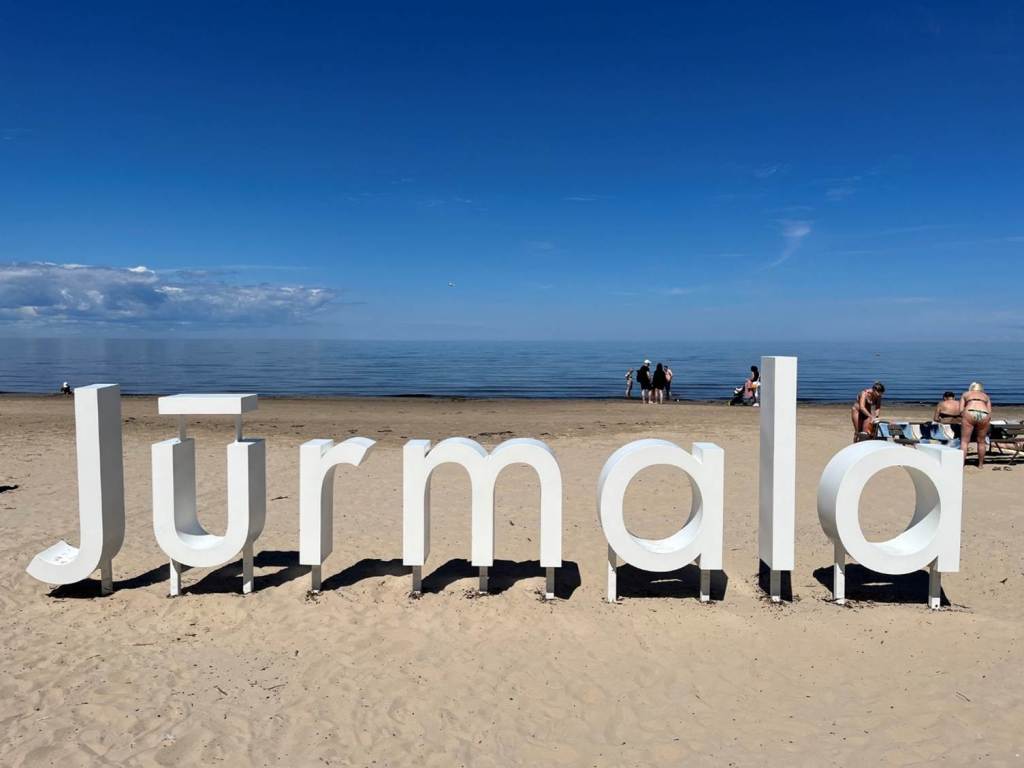
Greenery skirts the edge of the beach, bars and restaurants are present but never overwhelm. We paddled in the Baltic (yep, cold) though a few hardy souls were somewhat braver. The water remains shallow a remarkably long way out.
Now, neither are beach people, preferring to swim than sunbathe. Nevertheless, this was as fine a beach as either have kicked sand. It could make a fantastic base, especially if children are part of your retinue, with Riga only half an hour away.
Jomas iela, running parallel to Jūras iela, showcases further late 18th, early 19th century architecture. Again much of which is wooden or clapboard. We zig zagged between the two to better get a sense of the neighbourhood. It’s strikingly elegant. Occasionally gorgeous.
By now, nearer Majori Train Station than Dzintari. Both in the same zone (B) so no issue jumping on a train there.
We adored this area and probably spent best part of 4 hours exploring. And a wonderful 4 hours it was. Made the old town look very ordinary.
Brief hotel stop before popping back out for a couple of vinos. A return to hotel to pack, shower, chill. Reasonably early start the next morning.
Riga Thoughts
The old town is compact and quickly explored. It has charm somewhat ruined by a get pissed, eat crap and vape to we die vibe. Now, for those considerably younger, the old town may well be Valhalla. It had that feel. And who am I to disagree.
Nevertheless, Riga, for us, came into its own outside of the old town. Elegant architecture, bustling streets populated by appealing shops, bars and restaurants. Greenery abounds. Riga has a certain air of sophistication once removed from the old town.
And Riga, as with Vilnius, appears to be exceptionally well kept. Litter was rare, fly tipping non-existent.
And please do create a few free hours for Jurmala Beach, Dzintari and Majori. You will no t be disappointed.
FINAL THOUGHTS
What a tremendous mode of transport train travel is. Obviously, trains have formed an integral element of many of a foreign climes excursions. Though, perhaps never to the same extent.
TF sorting trains and hotels was an undoubted success. Self booking is undoubtably doable, and perhaps cheaper, though can be somewhat daunting. We would not hesitate to use TF again in similar circumstances.
Train travel, especially on those lengthier journeys, offers a unique opportunity to relax, decouple (get it?) from the many problems of the world. Listen to podcasts, music, read a book or, controversially, chat with your companion. And as, a country not your own, flows conveniently past.
We loved the whole experience. And are planning a longer trip in the next couple of years.
HOME
We sacrificed a very early flight into Gatwick for a later flight into Heathrow. Idea was great, the stopover in Helsinki’s impressive airport made it less so.
Arrived home a little before 6pm with the following day (Sunday) enabling a little recuperation before real life resumed.
Perfect.
Thanks for reading, Tony (July 2026)