NUREMBERG, BAMBERG, REGENSBURG 

Our Ealing home to clearing Heathrow Terminal 2 security, one hour. Probably a record. And the reason we favour the Elizabeth Line and Heathrow for our jolly jaunts.

A robotic cleaner – with a sex upped name – was causing some amusement and curiosity. This clever, and surprisingly cute, machine asked travellers to clear its path in order to complete its cleansing duties. Initially politely. Reasonably sure I heard frustration creep in. 

Direct flights from Heathrow to London only operate for the Christmas markets period. Outside of these consumer binges 2 flights are needed. Into Frankfurt, out of Frankfurt. The actual flights were both short and painless. The in between bits, less so. One runway taxi reminiscent of an M25 traffic jam. 

Once landed, disgorged and happily reunited with one’s bag, we jumped on the U2, a cog on Nuremberg’s small but seemingly efficient metro system. To be fair, I only tested it once more. The return journey to the airport. Probably not a representative sample.

NUREMBERGARRIVAL

Our temporary home were the Brunnen Apartments. Central, comfortable complete. Equipped with a small but very serviceable kitchen. Invaluable for a week long stay. Check them out. 

Once in, we were out. Our local ‘hood offered numerous tempting food haunts, many Korean or Japanese. Plus, my favourite, supermarkets. Two within a 5 minute walk.

No set agenda, meandered, toying with the old down. And discovered Bierwerk.

Sat outside and sipped a decent lager. Characterful inside, perhaps 10 taps mainly local lagers and beer. Fair enough. Bottles and cans available, showcasing a greater variety. Food also available. Worth a stroll, if not necessarily a hop head destination. 

It was early evening, we were knackered. Back to the hotel, slept 10 hours. 

Brief History

Nestled in Bavaria, Nuremberg Kaiserburg (castle) first appeared in the 11th century. Constructed, not as an apparition. Both Free Imperial City status was granted and city walls were erected in the 13th century. Probably not a coincidence. Growing economic power, wealth and, presumably, taxes inevitably followed.

The 13 and 14th centuries saw the construction of gothic masterpieces such as St. Lawrence Church (1298), Frauenkirche (1361) and the Luginsland Tower (begun 1377).

In the 15 and 16th trade booms, wealth accumulates, city walls reinforced (wise). Nuremberg, centrally located, has become a European trade hub.

Early in the 19th century Nuremberg loses its Free Imperial City Status as Bavaria goes all ‘Borg’ and assimilates the city.

Ironically, parts of the original city walls are destroyed in the 18th century to allow expansion – sounds vaguely familiar.

Nuremberg, in the 19th century, witnessed a revival of interest in medieval art and architecture, leading to restoration of the castle. Many of the still surviving neoclassical building flourish during this period. Paradoxically, perhaps, Nuremberg also becomes a major industrial centre for mechanical engineering and electrical equipment.

NUREMBERG PROPER

Suffice to say, this wasn’t our earliest start. 

Sus Christmas marketed Nuremberg a few years ago. It’s is a tad warmer. As I write, just shy of 30 degrees. 

I’ve dallied with visiting both Nuremberg and Bamberg for too long. With chum Mike. For the beer. Bamberg, in particular, is a renown centre for German beer production. Numerous brewpubs dot the city. A tad ironically, a recent and fascinating  employment jaunt within the wine industry delayed my beery Nuremberg plans. Beer is in a few days, now is for tourist. 

As many will know, Nuremberg was tragically bombed, for the people who live here and the architecture they populated, by the allies during WW2. War, that’s a great idea. 

The old town has been restored to its medieval glory – 90% of the old town perished. The merits of which can be argued. It generates tourist pounds, dollars, euros. Perhaps even creating a more favourable environment in which to live. Certainly beats 70s tower blocks. Done that, didn’t work. 

After some searching we found Kettensteg (The Old Chain Bridge), constructed in 1824 and the oldest European example of its kind. 
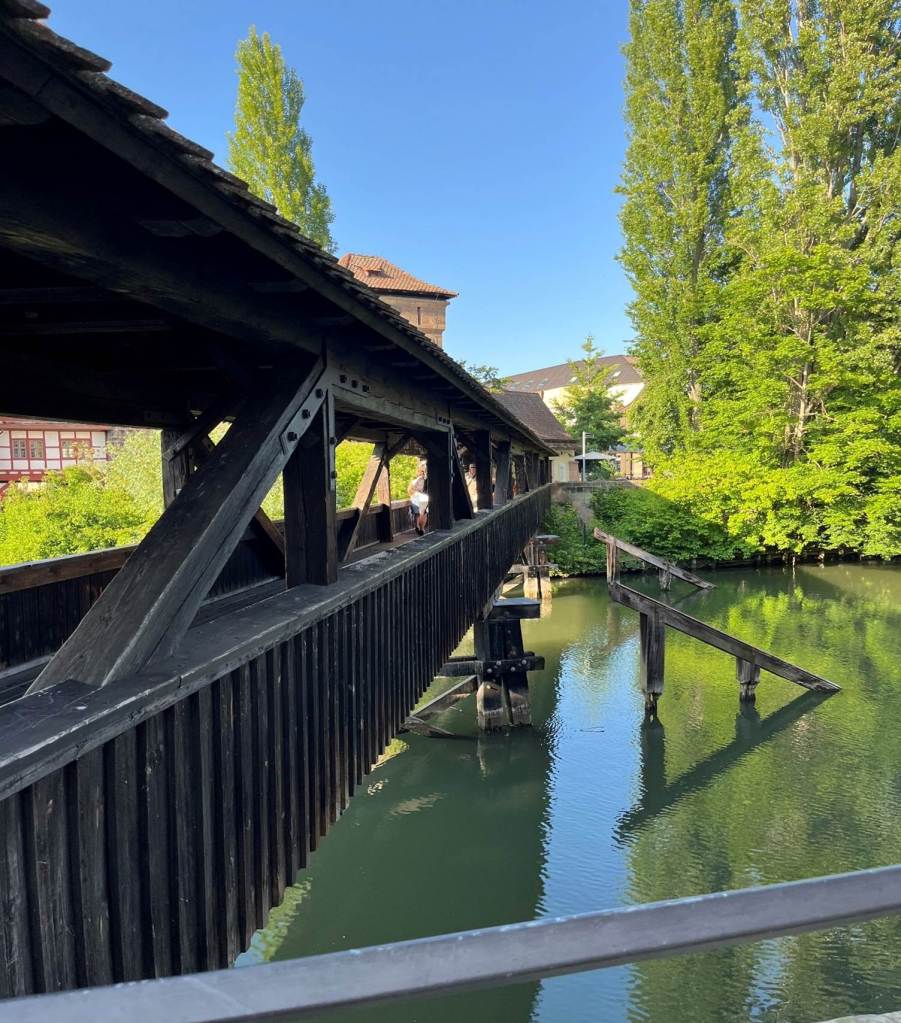
Riverside vistas, the Pegnitz river is a constant and welcome companion, birdlife and the odd fish all add extra adorability. A remarkable transformation considering the river was once heavy polluted due to waterside industries. 
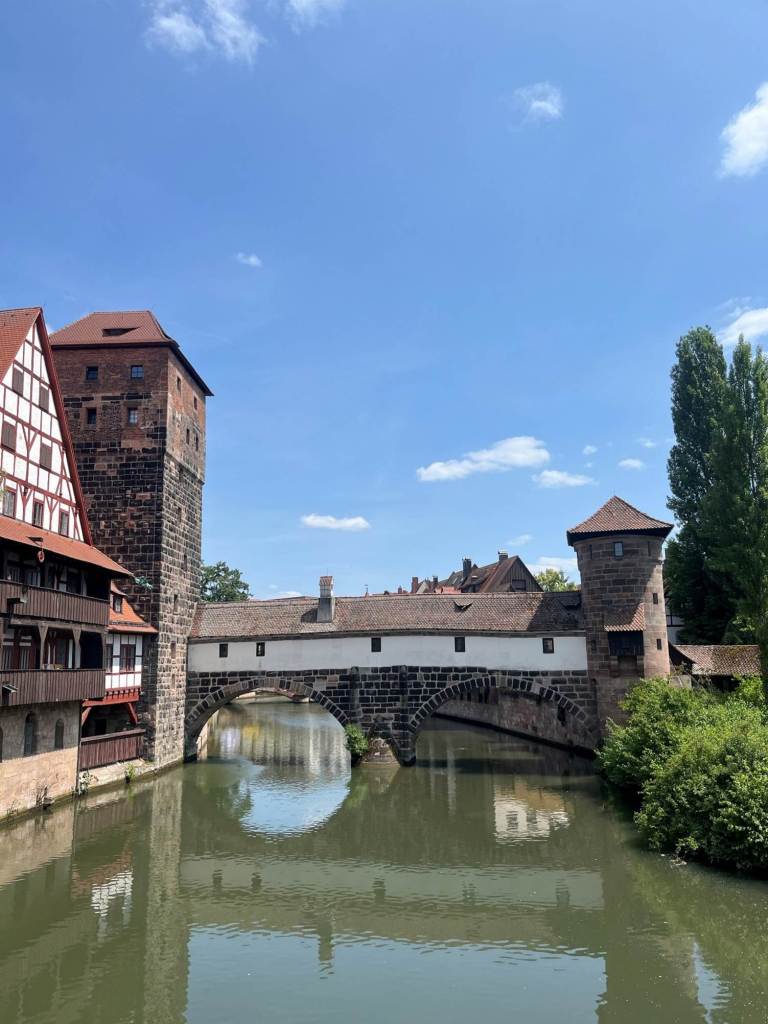
The Thames has undergone a similar transformation and now considered one of the cleanest metropolitan rivers in the world. Don’t be deceived by its murky appearance. Remarkedly, 100 plus fish species now call the Thames home.

Further directional confusion brought us to Weißgerbergasse (Tanner Lane). With its half timbered houses, cobbled street many consider Weißgerbergasse Nuremberg’s most iconic street. Built on the wealth of Nuremberg’s medieval leather industry Weißgerbergasse now hosts cafes, bars and restaurants. 
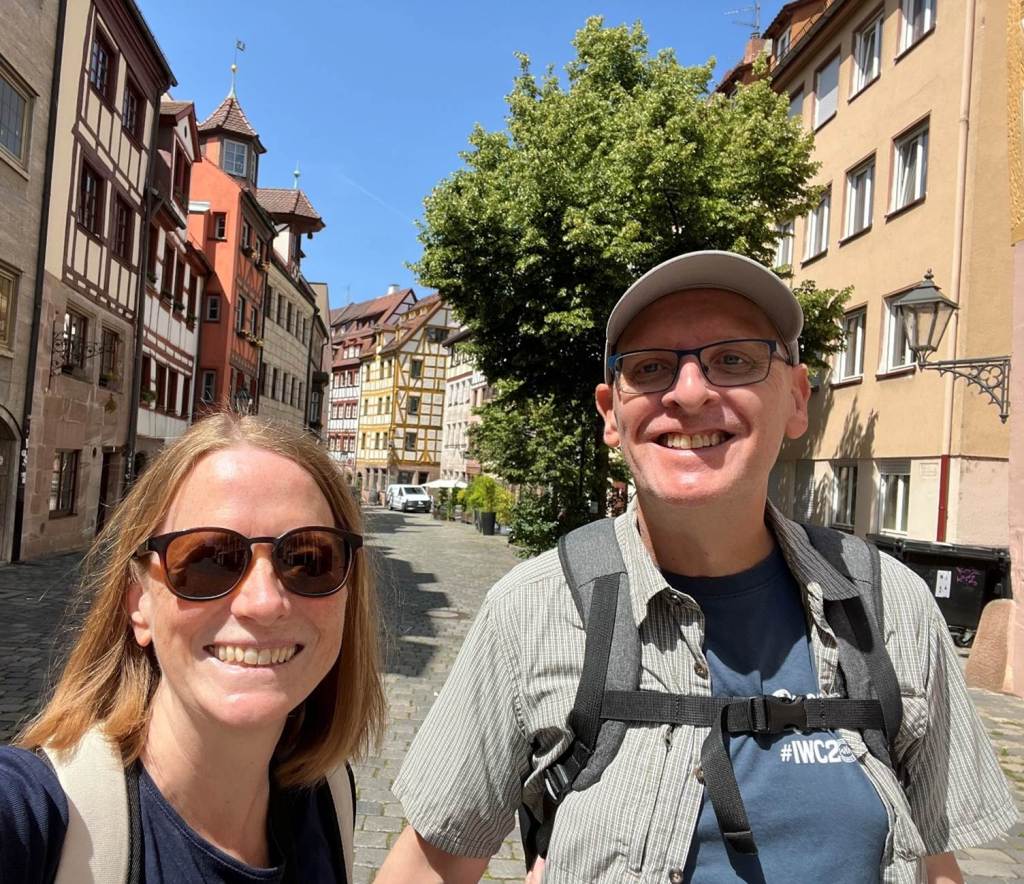
At the top of Weißgerbergasse is St Sebald’s Church. Constructed in the 13th century in the must have Romanesque style and supplemented in further centuries. Including the always popular 17th century Baroque. It suffered serious damage during WW2 and, like much of what we saw, has since been reconstructed. 

Sebald, the man, actually financed St Sebald’s and, literally, helped to build it. Buried there too. Must have loved that church. Popped in. Popped out. Worth a glance. 

There are no Cathedrals in Nuremberg. Likely due to the embrace of Protestantism. Over time most Nuremberg Catholic churches have been converted to Nuremberg Protestant churches.

Nuremberg Altes Rathaus (town hall) was again built in the 14th century including a great gothic ceremonial hall. Again it was smashed to smithereens. Again it was painstakingly rebuilt post WW2. 

Next up, Platz am Tiergärtnertor, a straight run from Altes Rathaus. An attractive square with classic medieval (reconstructed) architecture. The square is a popular place to enjoy a beverage or two and lively later on. 
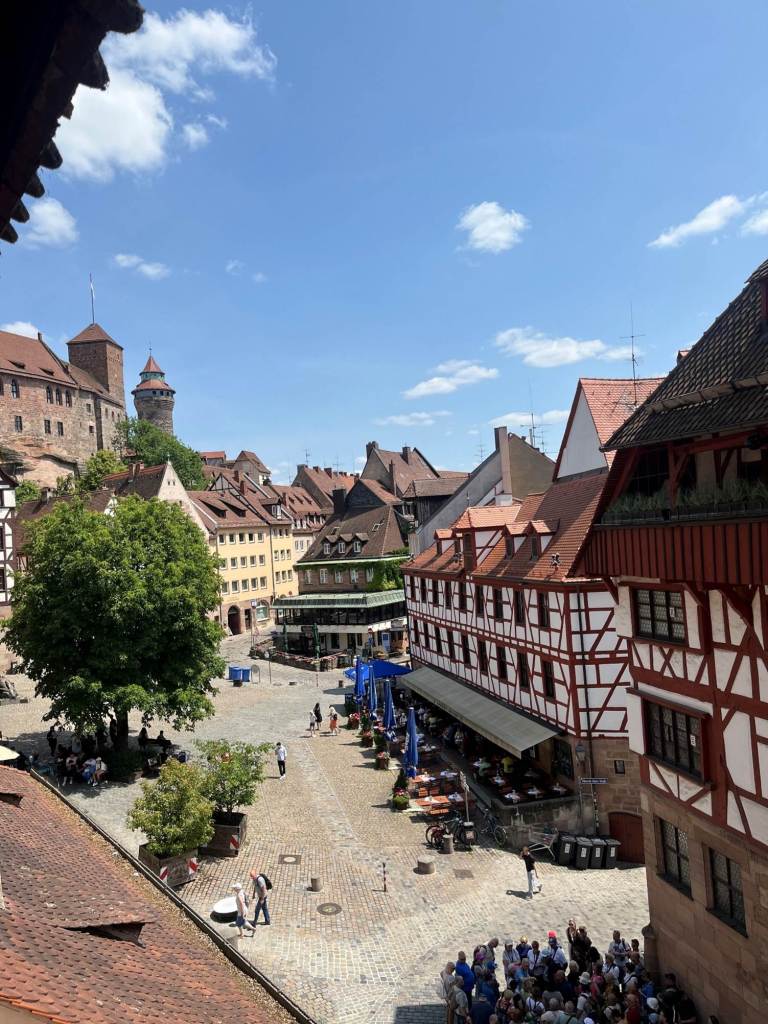
One oddity is Das Hase, a tribute on an Albrecht Dürer picture of a young hare. Not something you would wish queueing behind you at Tescos. And hidden by the larger tree on left of photo. Some would say a positive.

Abrecht was born, lived and died in Nuremberg and is one of their most famous sons. It’s possible to visit the house he once lived in, one of the few surviving burgher houses from Nuremberg’s golden age. Now a museum.

There’s also tours of the WW2 art bunker where Nuremberg, sensibly, stored many of its art treasures during the allied bombing. 

The Kaiserburg (Imperial Castle) looms large directly above Platz am Tiergärtnertor. It’s a castle with baggage. Fascinating baggage. It has links to the Holy Roman Empires, assorted kings and the Nazis. 
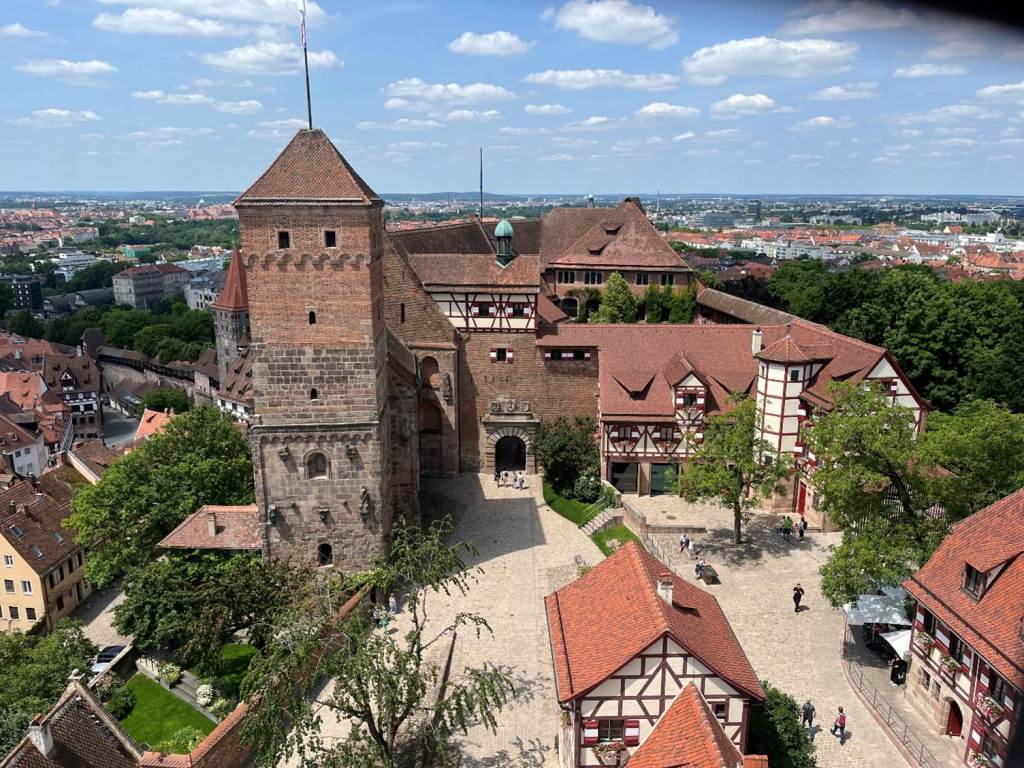
Kaiserburg dates back 1,000 years. Trashed in the 15th century, rebuilt in the 19th century, trashed (yep, WW2) and rebuilt in the 20th century. Remarkably some Romanesque and gothic elements survived. You’re able to wander the large courtyard for free. Which we did. Payment grants access to inner rooms. Which we didn’t. Another time. 

Nuremberg was Hitlers favourite city. Not a ringing endorsement. He felt it was the most German of German cities. Hence the rallies. Hence the bombing. Hence the Nuremberg Trials. The latter to crush any symbolism Nuremberg might hold.  

We toddled into Bierothek, a craft beer take out place only. Both traditional and not so traditional ales though no refrigeration. Worth a look. 

Completed our Nuremberg exploration in a supermarket. Where else. Returned to hotel, rested before a short wander to Aztoria Wine. 

Then another supermarket, a sausage sandwich for me, something healthy for Sus. 

Large windows in our hotel opened affording a snoopers view of the pedestrian, shopping street one floor below – Breitegasse. A street for posturing, preening, chatting, sitting, watching. A place for teenagers, those from a decade later, friends and families. A wonderful spectacle. A human safari. 

We ate, people watched, watched people, people watch. No one looked up. They rarely do. A regular morning and evening ritual. 

BAMBERG

Brief History

Bamberg was largely spared the allied bombers as strategically irrelevant to the war effort. There’s an insult in there somewhere. UNESCO, those cheeky cultural curators, have awarded Bamberg World Heritage Site status. Deservedly. It has over 1,300 listed buildings. 

Bamberg, nestled in Bavaria, was first gossiped about in 902. A fort had been built exiting locals. Yesterday’s fort, today’s Cathedral Hill. Domplatz.

A century later (1007) Bamberg rose to prominence when Emperor Henry II established a bishopric. This transformed Bamberg into a spiritual and political hub of the Holy Roman Empire. Nicely played Bamberg.

By the 12th century the town had developed and flourished economically, architecturally and culturally. Its bishops becoming imperial princes in the 13th century, further cementing power and influence.

The 17th and 18th centuries again brought benefits to Bamberg. And though remaining Catholic throughout the Reformation Bamberg embraced the Enlightenment attracting original thinkers of the time. Baroque architecture flourished.

With its loss of ecclesiastical independence in 1802 Bamberg was indecently quickly consumed into Bavaria. Yummy.  

Nevertheless, the 19th century witnessed population growth and canal and railway expansion leading to improved trade and connectivity. And greater prosperity.

We were on a train to Bamberg by 10am. As we’re most of Nuremberg. Dressed in traditional lederhosen. Most supping on an ale. Probably not their first. It would shock a hardened footy fan travelling to an away game. 

I asked a lovely chap why. Apparently, a beer crawl across various cellar based drinking establishments in Erlangen. The train emptied at Erlangen. Some may not make it back. Possibly not out of the station.

The journey, around 45 minutes, was straightforward. The journey pretty in parts, non-descript in others. No airport exists in Bamberg, Nuremberg is the closest airport and city.

The ‘Bayern’ ticket, on advice the helpful Hapbahnhof staff, cost €25 for both, for 2 days. Unlimited travel within the Bayern environs. Bargain.

Our initial plan was to discover Maximilianplatz. This largely 18th century square, with the 19th century Maximilians Fountain centrepiece, is Bamberg’s largest and most significant. It appeared to be an ideal place to start. 

Didn’t happen. 

An unintentional detour deposited us in an agreeably local neighbourhood. ???? Provided coffee and cake. 

We sat outside, watched local traffic, watching us, watching them. Buses wandered by at surprisingly regular intervals. Local bus services are alive and well and apparently living happily in Bamberg. 

Yet again missing the now mythical Maximilianplatz we discovered Domplatz. Where to start. 

Domplatz – or Cathedral Square as it’s sometimes known – hosts some of the most significant structures in Germany let alone Bamberg. It’s cultural, historical and really, really quite splendid. 

Bamberger Dom – Bamberg Cathedral – is perhaps the darling of the Square. Constructed in the 13th century in the Romanesque style with later Baroque additions. Due in part to fire. We did quickly visit, the sheer size is striking. Trouble is, it’s again just another church. 

Neue Residenz, adjacent to Bamberger Dom, completed in the 17th century (hence the ‘new’) was home to the Prince Bishops of Bamberg until 1803. The rose garden is supposedly a highlight. 

It contains over 40 ornately magnificent rooms. Religion appears to have been replaced up extravagant living. Im sure the poor would have approved. 

Alte Hofhaltung, or old court, constructed in the 16th century replaced older constructs lost to fire or demolished. It also house those lucky Prince Bishops before relocating to Neue Residence. 

Completed on 1733 the Diozesanmuzeum, next to the Cathedral, was once a Jesuit College. It now houses a vast collection ecclesiastical art spanning several centuries including relics and manuscripts. 

Some buildings are possible to visit. We didn’t as not our cup of ecclesiastical. However, if your cup of ecclesiastical, the museum will be deserving of your time.

From Domplatz, towards Kloster Michaelsberg, one might find oneself visiting the 1,000 year old Jacobskirche. Bit of a survivor this one. Renovated in the 13th century, sighted for demolition during Bamberg’s secularisation, it still welcomes visitors and worshippers to this day. 

Kloster Michaelsberg (St Michael’s Abbey) is, inevitably, a bit of a climb. Located on one of the 7 hills of Bamberg. The temperature was hovering at a skin frying 30 degrees Celsius. Those monks were a selfish bunch. 

It was undergoing renovation on our visit – a wedding held in the brewery must have wrangled a good deal. 

The monastery dates back to 1015 with the 12th century St Michael’s Church a particular highlight. Later Baroque buildings, including afore mentioned brewery, add to the architectural ambience. Though unable to enter, and with scaffolding inconveniently positioned, its magnificence is not diminished. 

Ambling down, desperately seeking shade, we spotted a stork nesting on a small tower of a large residence. Its mate was flying gracefully above and soon to join its wife/husband. The nest was the largest I’ve seen. The storks huge, beautiful with a hint of dinosaur. We even spotted beaks of the young being fed. An absolute privilege. Thanks guys. 

From storks to early medieval fabulousness. Bamberg Old Town. As smooth a segway as you’ll ever see.

Bamberg Altstadt is an architectural gothic mediaeval, masterpiece. With Baroque embellishments. Fairytale half-timbered houses, secular and ecclesiastical edifices all shouting ‘look at me’. There’s even the odd bit of Roman ruin. Remember to look up. This helps to negate the same old, same old restaurants, tourist tat shops and fast food joints. Classier shopping establishments also available.

One particular must see is the Altes Rathaus (Old Town Hall). Constructed in the 14th century and liberally coated in frescoes (very Baroque). It actually rests on an artificial island in the River Regnitz. That cheeky little sister of the River Pegnitz.
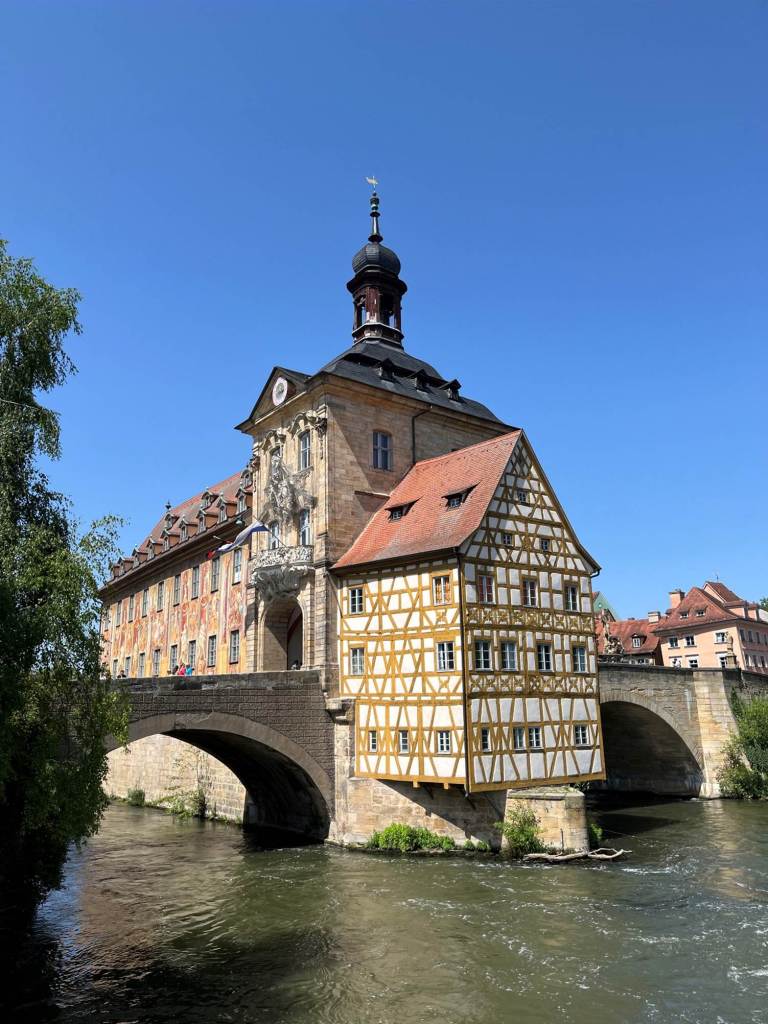
My advice is to just aimlessly wander. No set agenda. Just meander. Until you pass the Altes Rathaus for the third time. It’s that kind of place.

Brewpubs also dot the city. More on these cheeky chappies a couple of days on.

Finally Maximilianplatz. Oh dear, bit of a disappointment. It’s a large and attractive square – likeable even – but sadly lacks the character and personality of the rest of the town. If discovered first, perhaps with a market, we may have formed a more favourable view.

From Maximilianplatz we strolled back to the train station. It’s worth remembering Bamberg Altstadt is a 10-15 walk from said train station.

Bamberg is an absolute must see. A fabulous, fairytale masterpiece. And to any traditional German fan, this is mecca. The must see sights (Altstadt, Domplatz) can be seen in perhaps half a day. However, a couple of days would better do Bamberg justice.

REGENSBURG

Happened accidentally. And expensively. Our intention was to go to Furth, a mere 7 minutes away on our still valid ticket. 

I mentioned Regensburg, and before you could say ‘wrong train’ we were moving. 

It was an ICE service. A cross continent train. Cost us £40 one way. Each. On the plus side, it was quiet, comfortable and fast. And the toilets were nice. Though I never worked out how to lock them. As one poor chap discovered.

A kind hearted passenger agreed to purchase tickets and we pay him back in cash. The guard had asked for volunteers. It’s bizarre no facility for onboard payment was available. Either for tickets and/or fines. Presumably, tickets need to pre-booked. 

The calming vistas of rolling, wooded hills, farmland and pretty villages soothed away the financial pain. Sus was calmness personified. 

Once Regensburg came into view, chum guard made sure we knew. And quickly exited his train. We didn’t part friends. Can’t blame him really. 

Brief History

Regensburg was founded as a Roman fort called Castra Regina in 179 AD. The later medieval period was generous to the city. It became a significant medieval trading centre and Bavaria’s first capital.

In 1245 Regensburg achieved self-governance as a Free Imperial City. Go Regensburg.

From 1663 to 1806 Regensburg also served as the location of the Perpetual Imperial Diet effectively becoming the Empire’s political heart.

1810 saw Regensburg eaten by Bavaria. Bit of a muncher that Bavaria. Though damaged by a careless Napoleon Regensburg retained much of its medieval character and earned UNESCO World Heritage site status in 2006.

The rest is history.

Regensburg Rumble

As with Bamberg, strolling from the train station to the properly pretty parts takes between 10-15 minutes. The Old Stone Bridge, dating back to the 11th century, is oldest preserved bridge in Germany. A medieval masterpiece. Quite beautiful.

The 12th century, gothic St Peter’s Cathedral is a focal point of medieval Regensburg. We did have a peek. The 13/14th century stained glass windows are especially memorable. Even if the message is less so. The roof is gothic gorgeous. A Gothic ribbed vault was an 15th century addition.

Unfortunately, the dosh ran out in the 16th century and the twin towers were not actually completed until the 19th century. Whoops.  

Porta Praetoria is the remnant of Regensburg’s Roman gate. It’s been cleverly incorporated into a later building and simple to stroll nonchalantly past. I did. Sus spotted it. Perhaps a little underwhelming. Thankfully, Regensburg’s good bits are conveniently walkable, so equally simple to discover by chance. All hail serendipity.

The Altes Rathaus has both gothic and medieval elements. We actually explored a couple of the rooms that were open to the public. A more comprehensive tour is available.
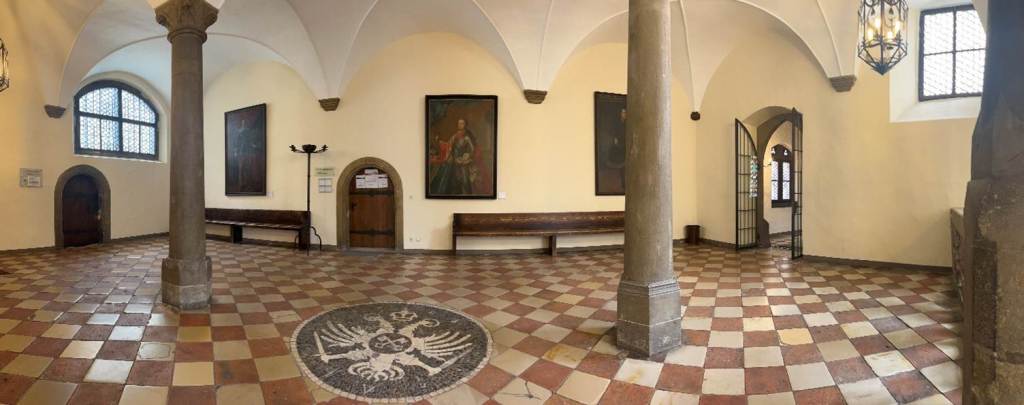
The Historisches Museum Regensburg is housed in a 13th century monastery. Those mischievous monasteries get everywhere. We didn’t partake. Nonetheless, with artifacts ranging from the stone age to the more modern, given the time we may well have.

It had started to rumble with thunder. Huge rain drops menacing tourists. We made a dash back to the station. Arrived dry, caught the next train back to Nuremberg.

A couple of confessions. I’m scribbling my Regenburg musings a couple of weeks after returning. Everywhere else, notes were taken at the time or soon after. And, before this streak of honesty moves on, we probably didn’t do Regensburg justice. For example, there’s Schloss St. Emmeram, Thurn und Taxis. A Rococo castle built atop a medieval monastery. Sounds like a cake. Which we neither ate or saw.

Regensburg is deserving of your time. A few hours is all you need. However, to properly acquaint oneself, make a day of it. This medieval town will thank you.

NUREMBERG – PROPER, PROPER

A slightly lazy start, 3 days of heat and wanderings had taken its toll.

We weaved down the more modern Köningstraße and more modern market – fresh produce, artisan nibbles and obligatory sausage stand. The Pegnitz gurgles happily to itself close by. 
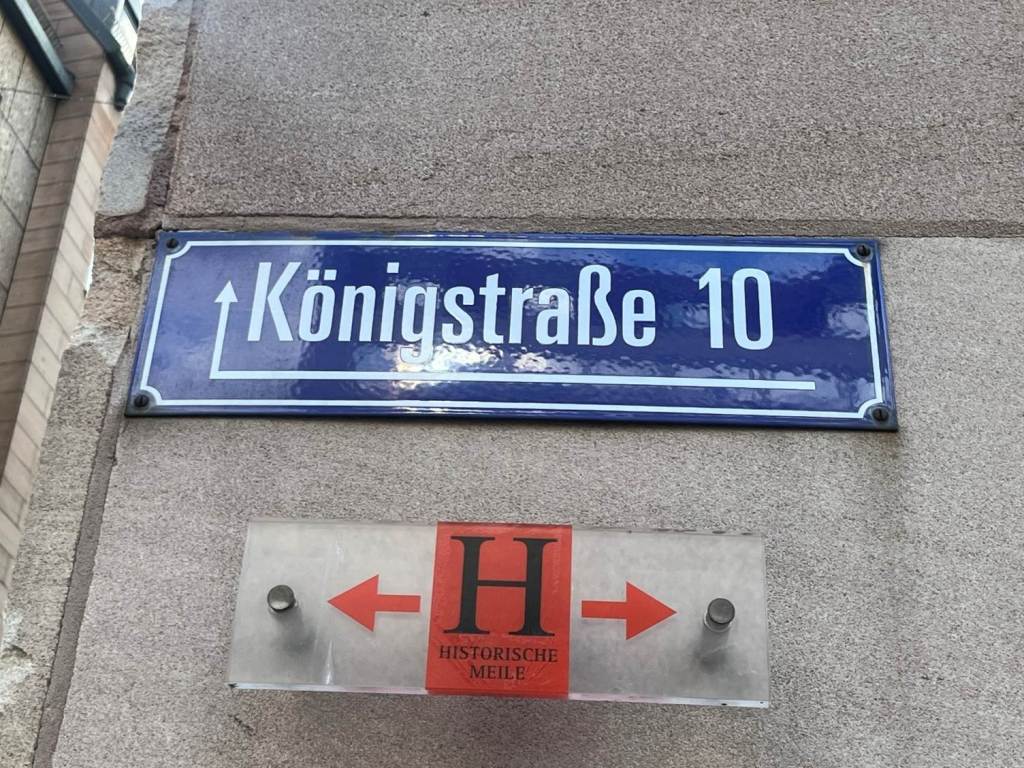
Narrenschiffbrunnen, or the less enticing ‘Ship of Fools’ Fountain, sits oddly on Köningstraße. It’s a modern sculpture based on a much older (1494) book of satires. Merits a glance.

We continued our weave down to Hauptmarkt of Christmas market fame.

Nuremberg was once 2 towns separated by one river. Naughty Pegnitz. Hauptmarket became the city centre of this particular universe when the 2 towns merged in the 13th century. As mentioned Nuremberg sat – and presumably hasn’t moved since – in the centre of Central Europe. And, during the medieval era, became a major trading hub. Location, location, location. The city even dabbled with the Silk Road. Cheeky. 

Back in the 13th century, the idiots that be (men) of the time needed the land for a new town market. The Jewish settlers had turned a swamp into a settlement. They were banished, about 600 were killed in a pogrom in one night. Or 10% of the then population. 

Being the self-important men they believed themselves to be, this was easily justified. Isn’t it always. The fact the Jews had become the city’s main money lenders may also had a bearing. All debt was cancelled. And Frauenkirche, nearby, was constructed during the 14th century on the site of a demolished synagogue.

One of the most notable features of Frauenkirche is the Männleinlaufen, a mechanical clock celebrating the Golden Bull of 1356. Think Holy Roman Empire not an award for fibbing. A Imperial Diet was the deliberative body of the Holy Roman Empire. Power and prestige came to any city granted an Imperial Diet. Nurenberg was well chuffed.

Whilst admiring Frauenkirche – and waiting for the mechanical clock to put on a show – we spotted one of those popular free tours. We went over, asked if it was in English, it was, we joined. 

We spent an enjoyable couple hours plus with latest chum, Martin. And a small ground of similar minded souls from various bits of the world. One lady had arrived from India only the previous evening. 

Though much of the tour covered previous explorations, it added both history and useful context. Some I’ve since incorporated into this blog. It also introduced us to sights we’d missed or missed their significance. 

A WW2 survivor is Schöner Brunnen a 14th century fountain living in Hauptmarkt. It translates to Beautiful Fountain. Subtle. 

It’s modelled on a gothic spire dotted with statues of religious and town worthies. Tad presumptuous. Doubtless said worthies paid for the privilege. At 19 metres tall and brightly painted it’s easy to tick off. A gorgeous wrought iron fence was erected around the fountain, by a lovelorn local craftsman, in the 17th century. I’m rather fond of a bit of wrought iron. Preferred it to the statue. 

The wonderfully named, single arched Fleishebrücke (meat bridge), was constructed in the 16th century. It’s rumoured to be modelled on the Rialto Bridge in Venice.  It also miraculously survived the carnage of WW2. 

This area sold meat, good, bad and quite possibly lethal. A small river island, visible from the bridge, was where the nasty stuff was sold off cheaply. 

St Lorenzkirche (St Lawrence) church was begun in the 13th century, the magnificent west facade in the 14th century, the twin towers in the 15th century. The west façade survived WW2 as purposefully protected with concrete blocks. Much of the rest wasn’t so lucky.

We visited post tour. It possesses a strange juxtaposition of Catholic and Protestant (converted from the former to latter). It works. Genuinely one of the most striking church interiors we’ve seen. And we’ve seen a lot. 

The 3 piece organ is one of the largest anywhere. And who wouldn’t want a 3 piece organ. A chap was rocking some tunes (in an ecclesiastical kind of way) for a short time during our visit.

Anyway, did some light supermarket shopping before heading back to hotel. Out again, meandering mainly down by the river, for a couple of hours.
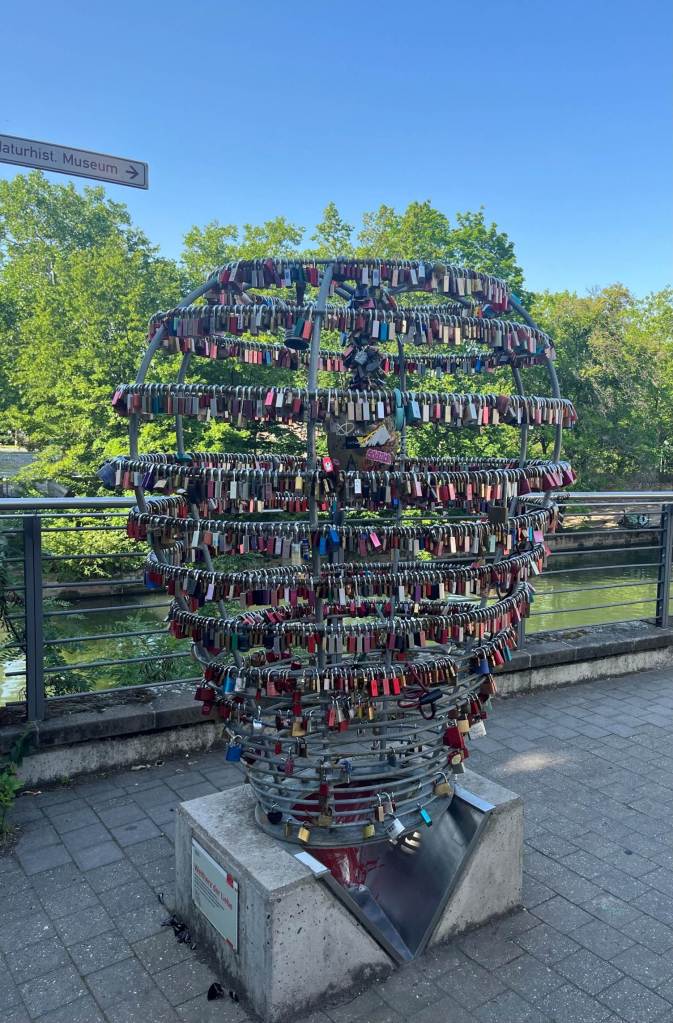
Our evening routine. With wine.

SUS’S BIRTHDAY

Was the following day, 17 June. Actually still is as I write.

Relaxed morning before a climb back up to the castle. There have been many harder castle climbs over the years.

Martin, our guide from the day before, had suggested climbing the Sinwellturm Tower and checking out the castle well. He appeared less enthusiastic concerning the castle interior.

Accordingly, we bought tickets for the well and tower only. And timed it perfectly for a well talk. Never realised a chat and demonstration relating to a 14th century could be so fascinating. Shout out to the lady guide.
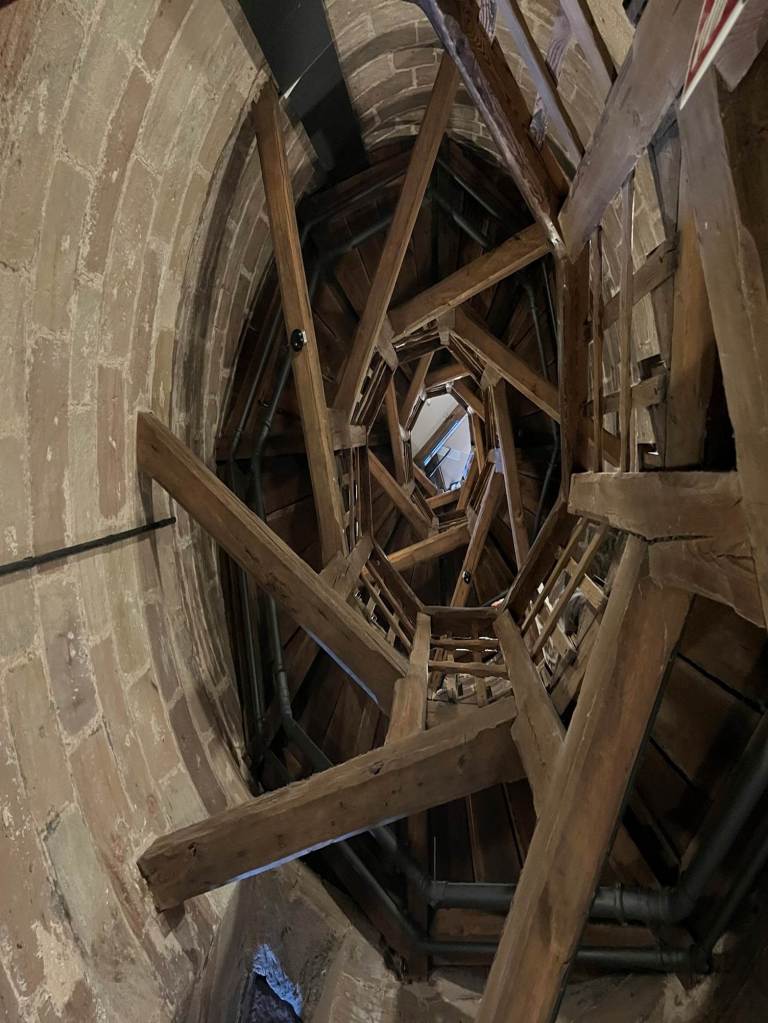
Sinwellturm Tower is, miraculously, another 14th century survivor. One does wonder how they missed. It is a bit of a clamber up via wooden stairs though the offered vistas are fabulous. However, the most poignant moments came from period photographs demonstrating before and after the allied bombing. Heartbreaking.
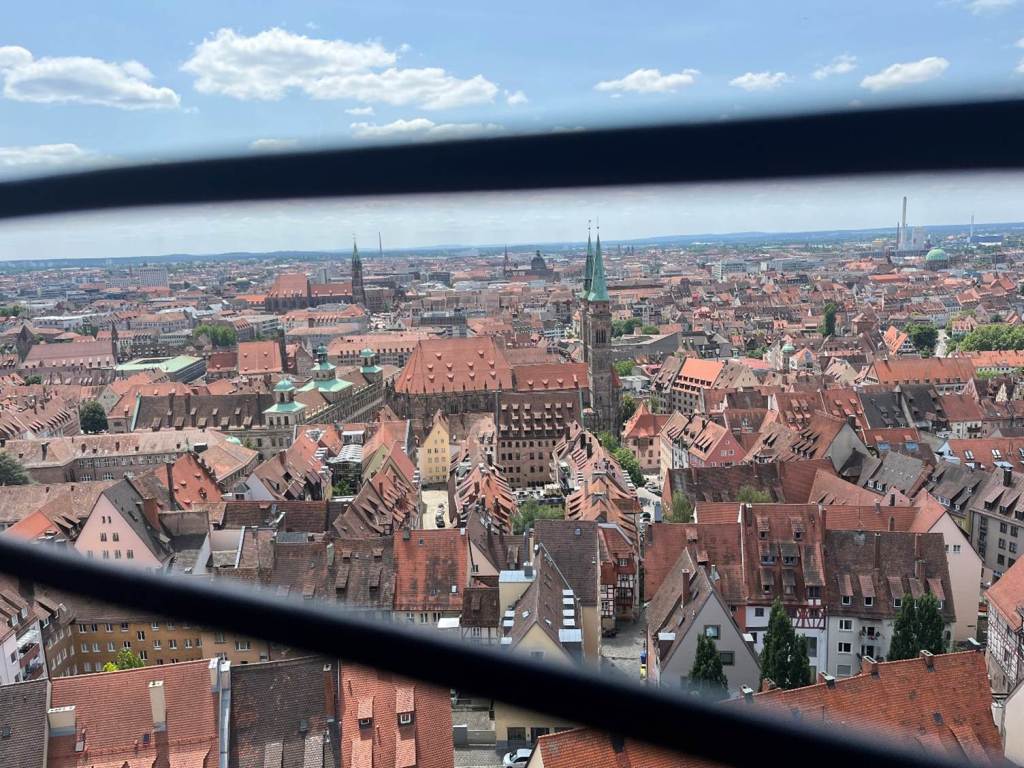
Four Euros gains access to both. Recommend splashing out.

The afternoon was spent in Achtzehn97, a wine bar in a Nuremberg suburb. Decent wine, interesting food, lovely staff.

Walked back to hotel and relaxed.

SUS GOES HOME, TONE GOES TO BEER FESTIVAL

Post Brekkie, we walked to the train station. Sus left for the airport, I returned to Bamberg to meet chum Mike.

His first time so strolled the old town, and returned to the glorious Domplatz. Bamberg is undoubtably suited to a second visitation. Me and Mike strolled streets me and Sus hadn’t. The waterside Fisherman’s Cottages were a particular delight. Time well spent reacquainting myself with this beautiful city.
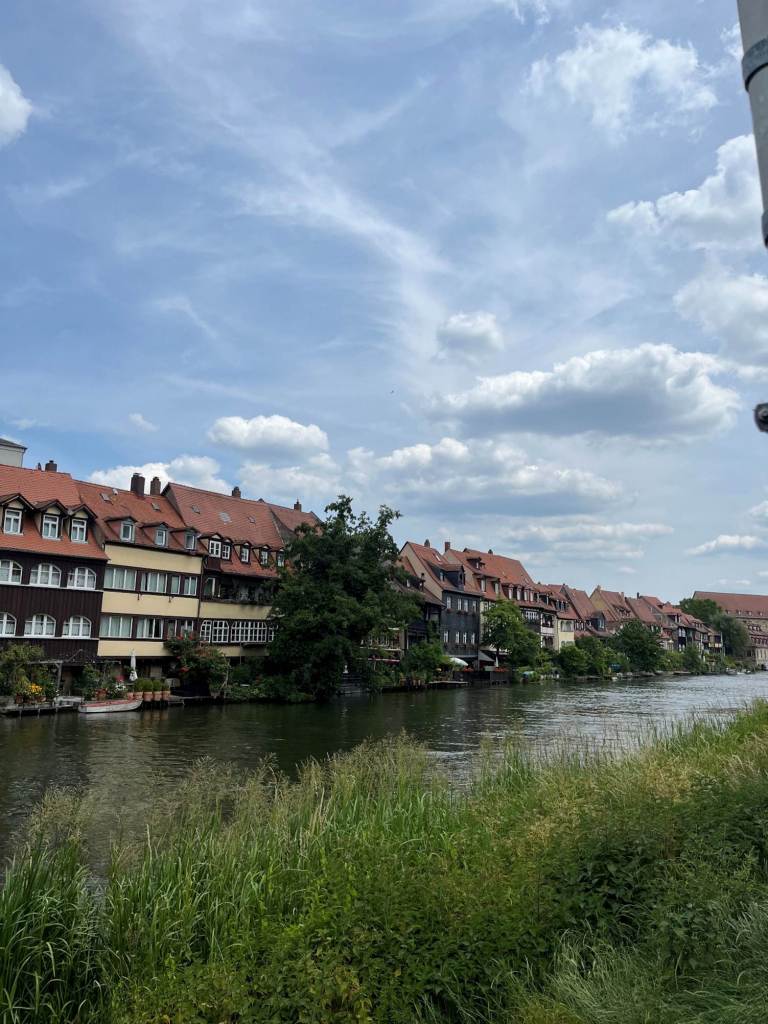
Brewpubs next. First up, Schelenkerla for their famous smoked beer. Surprisingly good. Very good in fact. Cynically, my first thoughts were a gimmick. Tempt tourists in, sell them an average product so they could take photos (OK, we did) and boast to chums back home (yep, did that too). I was wrong. Yes there was a touristy element but plenty of locals too. And most importantly, the famous smoke beer lived up to the hype.

Same result at second brewpub, Klösterbrau Bamberg. Another cracking ale. Very local, very good.

Only half litre served in both establishments. No tasters, no thirds or no halves. Probably too many tourists asking too many questions.

Rushed back to the station, returned to Nuremberg for the Fränkisches Bierfest. Said beerfest is convivially convened in the Imperial Castle moat. A most splendid, perhaps even baronial, backdrop.

Supposedly, one of the longest beer festivals anywhere. According to chum Mike. Having strolled the length of it I’m inclined to agree. Traditional beer dominates. Supped a couple, agreeable without being distinctive. And, as with Bamberg, half a litre only serving size option.

Oddly, and a little awkwardly, a deposit was paid for a glass. But said glass needed to be returned to the same brewery for said deposit. Same again with each following brewery. Each style has its own unique glass. As did some breweries. Mike was reprimanded for daring to be different and used the wrong glass for the wrong beer. Naughty boy.

We sank a couple of beers before going separate ways. Mike was staying with family a little outside Nuremberg in Erlangen.

CORPUS CHRISTI DAY

This year, falls on the 19th June. Today. My trip for a healthy breakfast was somewhat curtailed as very little – less than even a Sunday – is open. Including supermarkets. Where my healthy breakfast resided.

As the day progressed, a greater number of bars and restaurants opened their doors. Supermarkets and hight street shops remained closed.

Meandered accidentally (really) into the red light district getting a couple of half hearted hellos from the ladies. Not sure who was more surprised, them or me. Sus and I had toyed with the edges of the red light district a few days earlier. Without realising. Nightclubs, bars and pole dancing joints. Not my cup of entertainment.

Beat a hastily and welcome retreat to the less seedy part of town. Explored a little more before heading back to hotel and scrape together breakfast.

More meandering, a bratwurst bap, before a second visit to the bierfest. Connected up with chum Mike around 2 pm. Plus new chum Gregor, a relative Mike was staying with. Top bloke and, helpfully, knew his way around the breweries.

We saw a few punters with considerably smaller steins. Perhaps half a pint. Gregor asked and apparently these were available, and for a discount, could be filled halfway or to the top dependent on the brewery. Perfect.

We grabbed a couple and set about sipping. Guided by Gregor. Our very own German beer sommelier. Beer, conversation and bladders all flowed. A fabulous afternoon and early evening.
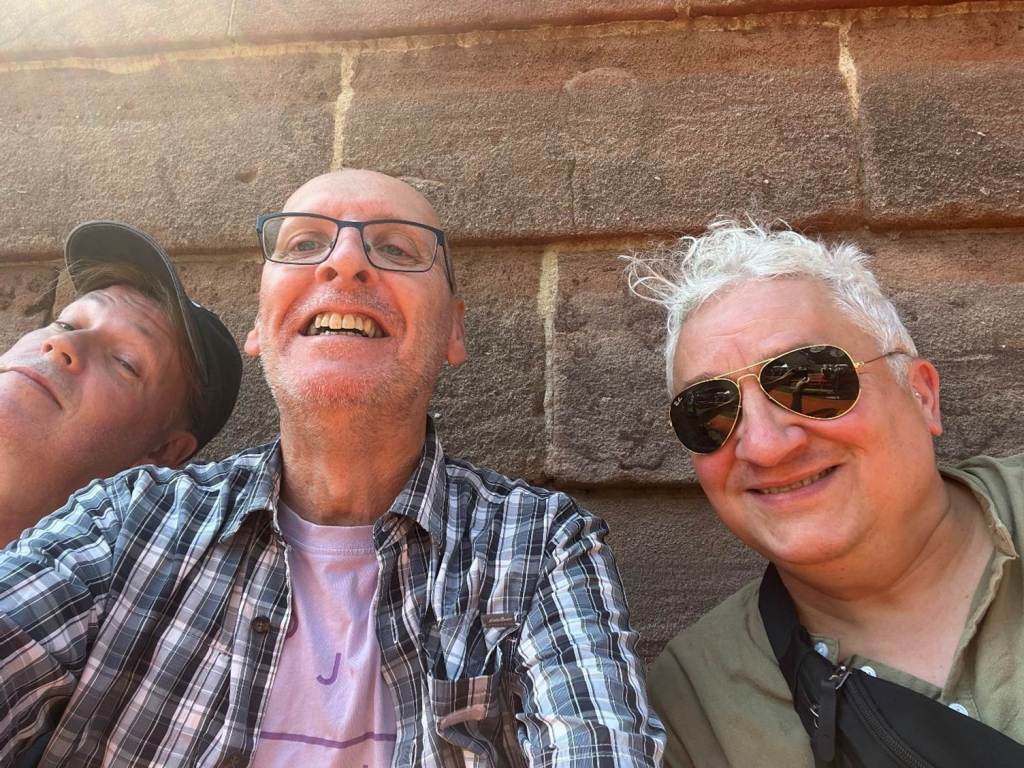
The beer festival was free, the toilets €0.50 a squirt. Probably made more money than charging entrance fee. Talking of water – kind of – no free wet stuff is provided. According to Gregor quite common though slowly starting to change.

Mike and Gregor went onto a rock bar for a couple of hours. I politely declined. My limit had been reached and flying home the following day.

Home

Not much to say. Checked out our Hotel, wandered hindered by large suitcase before U2 Metro and airport.

OBSERVATIONS

Most high street shops a supermarkets are closed on Sundays. As are many bars, cafes and restaurants. Nevertheless, plenty of bars, cafes and restaurants are open, particularly in and around the train station. 

Some stay closed on Monday. 

Metro tickets are purchased from machines. No barriers, no checks, a singular lack of interest, in whether we paid or not. We did by the way. Hamburg was the same. Fines for non-payment occur so best to purchase viable ticket. You know, the one time you don’t……

More people smoke, less vape. 

Public toilets are not free. Prices range from a pee inducing €1.50 to a more reasonable ‘let’s go again’ €0.50.  

CONCLUSIONS

We’re unapologetic Europhiles. Brexit, an awful name for a worse idea. So it will come as no surprise we rather enjoyed our time in Germany.

Nuremberg has an incredibly laid back and relaxed vibe. More than many other large cities we’ve visited. As already remarked, this may be related to the rebuilding its medieval heart. Whatever, it proves a delightful spot to stroll, sip a coffee or relax with an ales or two. A long weekend should cover most of the basics.

You may decide to linger in Bamberg or, alternatively, visit from Nuremberg. You should do one. Bamberg is a gem, worthy of an overnight stay. And for any beer buff Bamberg is mecca. I’m toying with popping back at some future point. Lingering for a few days to better study and understand the cities’ beer culture.

Regensburg is another worthy destination. Nevertheless, if only one can be visited, it should be Bamberg.

Many thanks for reading, Tony (July 2025)
Hamburg

Hamburg, officially and rather grandly the Free and Hanseatic City of Hamburg, is perhaps surprisingly Germany’s second largest city (Berlin takes first prize), home to 1.9 million residents and second largest economic centre. By cargo volume Hamburg port is the third busiest after Rotterdam and Antwerp. I’m sure Hamburg wins at something.

It does. Hamburg comprises more waterways than the combined efforts of Venice and Amsterdam. It’s also one of the greenest cities in Europe. Stick that up your portals Rotterdam and Amsterdam.

I have visited before – Sus hasn’t- but that was 40 years ago as a spotty teen maxing out my Interrail card. I suspect it’s changed.

An especially pissed off storm – whose silly name alludes me – delayed our flight by a day and we arrived on the Friday, not the Thursday as originally planned. In fairness we weren’t heading home until the following Friday and busy Wednesdays made any delay less onerous than it might have been. And we went to the pub.

More annoyingly, our BA flight was delayed by about an hour delaying our arrival at our hotel until about 8pm.

NH Mitte Hamburg is a 5-10 minute walk from the magnificently named Schlump (U2/U3) and a 5 minute walk from more traditionally named Christuskirche (U2). If you prefer a stroll, and we generally do, much of tourist Hamburg is reachable within about 30 minutes. The staff were friendly and helpful, our room clean and welcoming and the breakfast – we had it twice – excellent if expensive.

Like any other metro, in any other city the Hamburg Metro is not especially complicated. It’s clean, regular and extensive. The ticket machines less so. We observed the lesser spotted staff member though none appeared equipped to sell tickets to frustrated tourists. Probably wise.

Nevertheless, the most distinctive aspect of Hamburg’s Metro was the total lack of barriers. Anywhere. Now the good folk of Hamburg seemed a decent bunch but a system built on trust? For use by humans? Bizarre.

NH Mitte Hamburg is located in residential and pleasantly upmarket Eimsbüttel – the German language continued giving all week – one of Hamburg’s 7 boroughs. Once checked in, and a chat with the ever helpful staff, we wandered onto the wonderful Weidenallee. Literally around the corner from the Hotel this charming street is packed with interesting restaurants, local bars, bakeries and other speciality shops. And architecturally attractive with many handsome late Victorian and early 20th century buildings.

Weidenallee is a grown up street, witnessed by seemingly hoards of pram pushing parents. This is not the Reeperbahn and much the better for it. Unless you’re under 20 with raging hormones. We, however, loved it.

Denns, an organic supermarket, became a regular haunt (sad but oh so true) as did Beyond Beer (www.beyondbeer.de), a bottle shop full of beery treats. Sus had chosen the hotel. I hid my delight well.

For a little more craft beery stuff please go to https://wordpress.com/post/tonysbeersnobblog.wordpress.com/575

There’s also a Michelin one star restaurant (Jellyfish), annoyingly closed until after we returned home.

Hang a right at Denns and you enter Schanzenviertel, an area nicked from the lovely Eimsbüttel borough by the naughty Altona borough. Hamburg’s Hunger Games. Considered only second to the Reeperbahn for nightlife Sternschanze is chock full of bars, boutiques, takeout food joints and graffiti. Hamburg appears to attract graffiti artists. Must be the climate.

Depending on viewpoint, Schanzenviertel has definitely benefitted or suffered from gentrification. We both liked the area, with it’s Schanzenpark and convenient Sternschanze U Bahn (U3). We often stopped there for a cheeky takeout, a cheekier Denn’s or extremely cheeky light ale at Beyond Beer. All were between Sternschanze station and our hotel, perhaps a 10-15 minutes walk away.

The Long Walk

We had no set plan, just head towards Nord Hauptbahnhof, the Central Station. We took the roundabout route. Very roundabout route. And, I felt a tad unfairly, it rained on us. On and off all day.

Sus. Being Sus.

After starting as we’d finished the previous evening (Weidenallee and Schanzenvierte) we took a left somewhere (probably) before passing Hamburg’s very own entry into ‘Sexiest Telecom Tower’ along with the BT Tower near Tottenham Court Road here in London. Next modern exhibition halls (Messehallen on U2) before a welcome stroll through the quite lovely Stadtpark.

On leaving the park we discovered both the Radisson Blu and Central Station. The Radisson Blu was indeed the Radisson Blu. The Central Station was not the Central Station. It was the beautiful Bahnhof Dammtor and, an in another city, a main railway station.

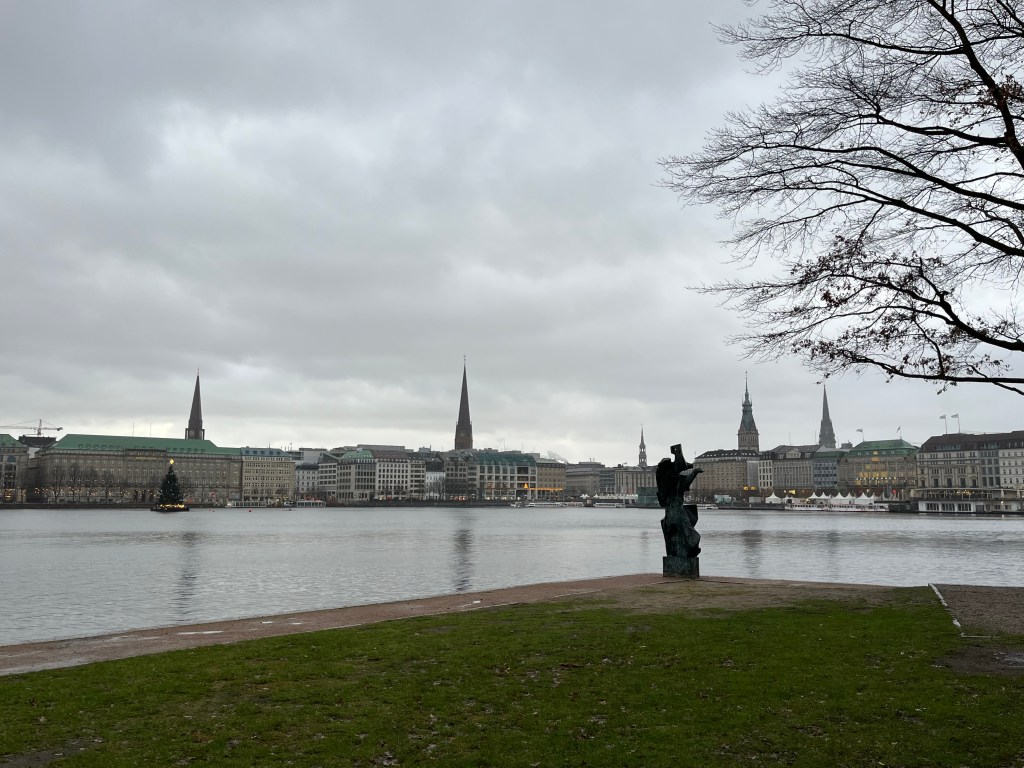
Continuing our wander we came across the Binnenalster (Inner Alster Lake). On the opposite bank spires peeked out from between handsome edifices and a resplendent Christmas tree.

A pretty 19th century bridge took us across – not literally we had to walk – to Hauptbahnhof. Victorian residential architecture is undoubtably handsome though I actually prefer the Art Deco and Georgian period. Nevertheless, Victorian residential architecture pales in comparison to Victorian industrial architecture. Temples to power and influence. Hauptbahnhof is such an example. Hamburg had arrived.

It’s gorgeous, both on the outside and perhaps more so on the inside, rivalling such masterpieces as London’s St Pancras and New York’s Grand Central.

However, it should be remembered many accuse those same Victorians, with some justification, of architectural vandalism tearing down beautiful historical buildings in the name of progress.

The area around the Hauptbahnhof is a tad sketchy though literally across the road is the main shopping centre. High end shops vie with large department stores and chains for that holistic shopping experience. Agreeable enough not necessarily our cup of designer cufflinks.

Perhaps the highlight was a fish ladder enabling finned ones to navigate a difficult stretch of the Elbe. It’s a human solution to a problem often created by humans. Heartening to witness.

The Adam and Eve Soul Food Restaurant (Schanzenvierte) was our chosen eating establishment. And delicious it was too, easily recommended. Cheeky ales at Beyond Beer (https://www.beyondbeer.de/en/) polished off our long walk – 10.5 kilometres according to our suspiciously clever iPhone.

New Years Eve Day/Lubeck

After our first attempt to eat as much as our own body weight at breakfast – as would you at 20 Euros a pop – we began our exploring.

It was a Sunday. Hamburg, with the exception of a few restaurants and bars, closes its doors on a Sunday – vaguely reminiscent of England in the 1980s.

However, if you find yourself need of retail therapy or schnitzel sandwich the larger railways stations, including their shops and bars, are open as near normal. And Hauptbahnhof was our destination, a Lubeck daytrip the purpose of the visit. Not a schnitzel sandwich.

Located at the end of the platforms a small glassed in area served as a bar and smoking den. It was busy at 11.30am and appeared to have been open for some time. Perhaps glassed so that passing passengers might judge and feel better about themselves. I certainly did and did.

From our own observations, smoking was more prevalent in Hamburg than London. Conversely, vaping appeared considerably less popular particularly amongst the young.

Acquiring tickets and the 45 minute train journey were painless. The unfolding scenery, comprising of uninspiring countryside and somewhat dreary conurbations, was disappointing.

Lübeck was neither dreary or uninspiring. This mediaeval marvel, and UNESCO World Heritage Site, is surrounded by water and perhaps surprisingly built to a plan. Which survives intact, in part thanks to 1970s activists, to this day. Mediaeval and Renaissance town houses, 5 gothic churches and canals dominate Lübeck’s old town. Much of Lübeck originates from when the Hanseatic League was top mutt with lucky Lübeck controlling North European long distance trade.

Lübeck is gorgeous even on a wet, cold and windy Sunday afternoon. We spent several happy hours wandering contentedly around only stopping for vegan nosh at NI Vegan. Genuine surprise – it was open and the food was possibly the best we ate all week.

Suitably foddered we explored further discovering the Rathaus – a sometimes appropriate moniker for those town hall folk if a tad unfair on rats – and beautiful churches. Popping into one showed the outside was no fluke. Magnificant.

We had a 27 minute walk back to the train station. Our train was in 29 minutes. Rain added further incentive. A little drama, particularly when cruelly tricked by google (sent down a blocked road). Cue dramatic rousing music as we boarded with minutes to spare. In truth, the next train was only half an hour behind. More ‘Railway Children’ than ‘Brief Encounter’.

Back to hotel, beers bought the previous evening, whilst listening to New Year fireworks. Not the barrage one hears in London.

St Pauli

Knowing New Year morning would offer sparse breakfast options we, at the hotel buffet breakfast, again maximised our food intake against body mass. Including a donut. The fine people of Hamburg – and they really were – love a donut or several.

Predictably, tranquility reigned as we strolled towards St Pauli. With the exception of a Trans club. Apparently and rather admirably still drum and bassing (or whatever) the day after the night before. It was loud. It was after midday. Making it beyond 10.30pm fills us with a sense of pride.

Detritus of Hamburg’s partying masses was, unremarkably, everywhere. Debris from unimaginative beverage and food choices were expected. What wasn’t was evidence of deceased fireworks liberally smeared over the urban landscape. Though Germany has relatively strong laws surrounding the sale and setting off fireworks Hamburg appears to favour the pavement as a launchpad. Bizarre.

On our way to the infamous Reeperbahn we passed FC St Pauli, a football team in the 2nd tier of German footy. So what? FC St Pauli have developed a cult following within Germany and outside for their strong and politically liberal stances. The stadium is sold out game after game. Sales of their merchandise out strips most top tier clubs.

I love football, have most of my life. Nevertheless, occasionally it’s not about trophies, the football on the pitch or owner’s money. It’s about a strong community and a better world. Go FC St Pauli.

A carpark sits in front of the ground and a bizarre construction to one side. Part evil factory, part futuristic garden city in the sky. This bastard child is still under construction. What will it become when it reaches building adulthood. A destroyer of worlds or a bringer of peace?

The Reeperbahn is a street, or neighbourhood, infamous for nightlife, bars, fast food joints and prostitution – legal in this bit of Hamburg. Unsurprisingly, a street both loved and loathed, was quiet early afternoon on New Year’s Day.

Epic levels of detritus from the previous night’s festivities covered the street. The homeless gathered around in small groups. An air of vague menace added to the weird vibe. The Reeperbahn, particularly one side, is all rather nasty. Sus wanted off as soon as she arrived on. I felt similar but wanted to better understand this notorious street.

Not for us, not our cup of fizzy lager. We are in our 50s, not 20s. For any hormone laden, late teen the Reeperbahn might appear a nirvana. Vague memories of my 20s offer insight. If not understanding.

Cold weather and age had adversely affected my apparently shrinking bladder. A Brewdog, at the top of the Reeperbahn, proved most welcome. I chatted to the manager, acquired an ale, went to the toilet a second time. Then left.

On leaving the dog that brews – now that would get the punters in – we ambled over to Hamburg’s Speicherstadt, the warehouse district. Built between 1881 and the late 1920s this UNESCO World Heritage site is the largest warehouse complex in the world. And quite beautiful.

I’ve always admired warehouse architecture – Butlers Wharf being a favourite building in London – and Sus adores miniature worlds. One of these beautiful warehouses contained Miniatur Wunderland (https://www.miniatur-wunderland.com/). Put together my 2 enterprising brothers back in 2000 Miniatur Wunderland happens to be the largest model railway system in the world and been voted the most popular German tourist attraction. Apparently, many agree with Sus. I found it’s often the best way.

Miniatur Wunderland is properly spectacular with numerous miniature worlds including an airport. We spent 2 absorbing hours wondering at both the details and scale. Unfortunately, we weren’t able see all the worlds – somehow missed South America, not easy to do. There’s always next time.

Highly recommended.

Back to our hood for a beverage and food. Then sleep. We’d somehow walked further than the day before.

Harbour Cruise Day

Breakfast was at Denn’s. Obviously. It was an unpleasantly wet and cold day. Thermals were an invisible part of our wardrobe, probably a good thing seeing how figure hugging they were. No one wants to see that early on a back to work day.

We squelched our way down to the harbour – or Sus did. Leaky shoes, each foot encased in a plastic bag, doomed her to freezing feet for much of the day.

An English chap, with a disconcerting resemblance and manner of an ex colleague, explained the merits of the various boat trips. After careful consideration, we chose the first to leave. The weather may have influenced our decision. Being allowed on board to wait out the 20 minutes before departure perhaps played a part.

The small and agreeably serviceable boat was equipped with large expenses of glass, clean toilets and a bar selling snacks and beverages. An improvement on other watery excursions where a tiny wave might turn the boat into a mini Titanic.

We journeyed through the warehouse district, passed streets both recognisable and yet to be explored before the port proper.

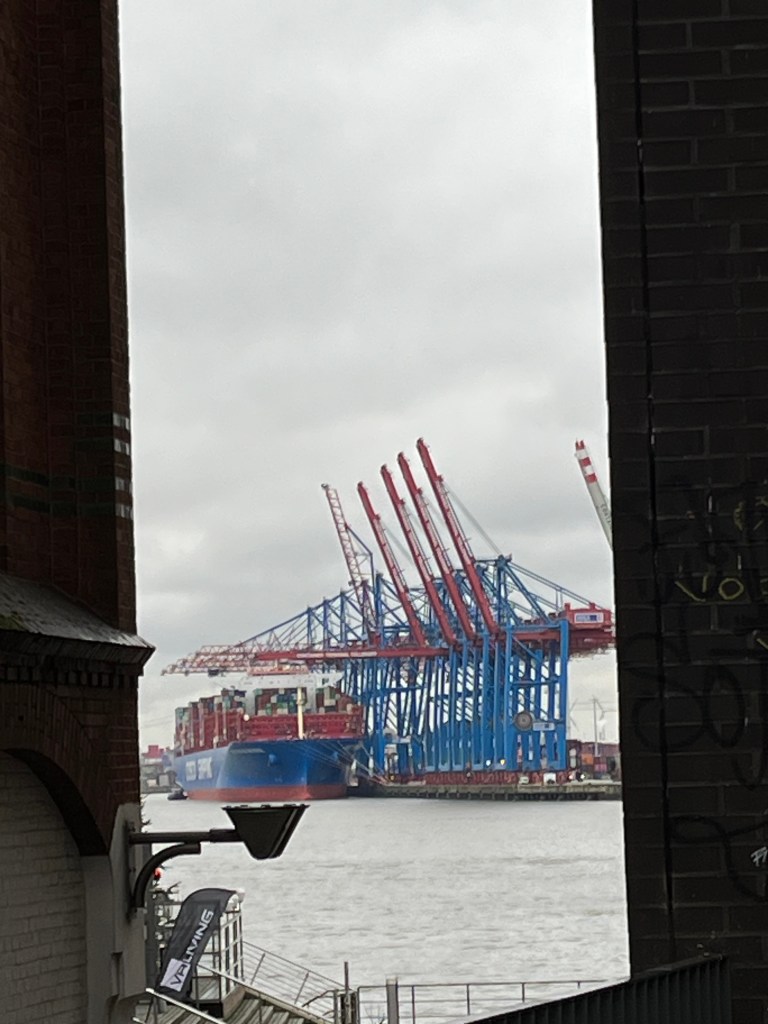
I was utterly captivated by the balletic loading of a huge container ship enduring the freezing cold and rain on a small open area at our boat’s stern. No human activity was visible only adding to this magnificent mechanical ballet.

Though expensive (30 Euro each) and with an overly loud and enthusiastic German commentary (English was available via an inevitable app) this hour long cruise, with and perhaps even because of the awful weather, was hugely enjoyable.

After again wandering around the shopping area, and with the weather unable to compromise, we headed back to the hotel so Sus could thaw out her feet.

You’ve guessed correctly, off to another craft beer spot for an ale or two. A 15 minutes stroll from our hotel brings thirsty patrons to the unimaginatively named Craft Bier Bar. The lack of the oft silly name more than compensated by about 30 taps of quality crafts and delicious pizza.

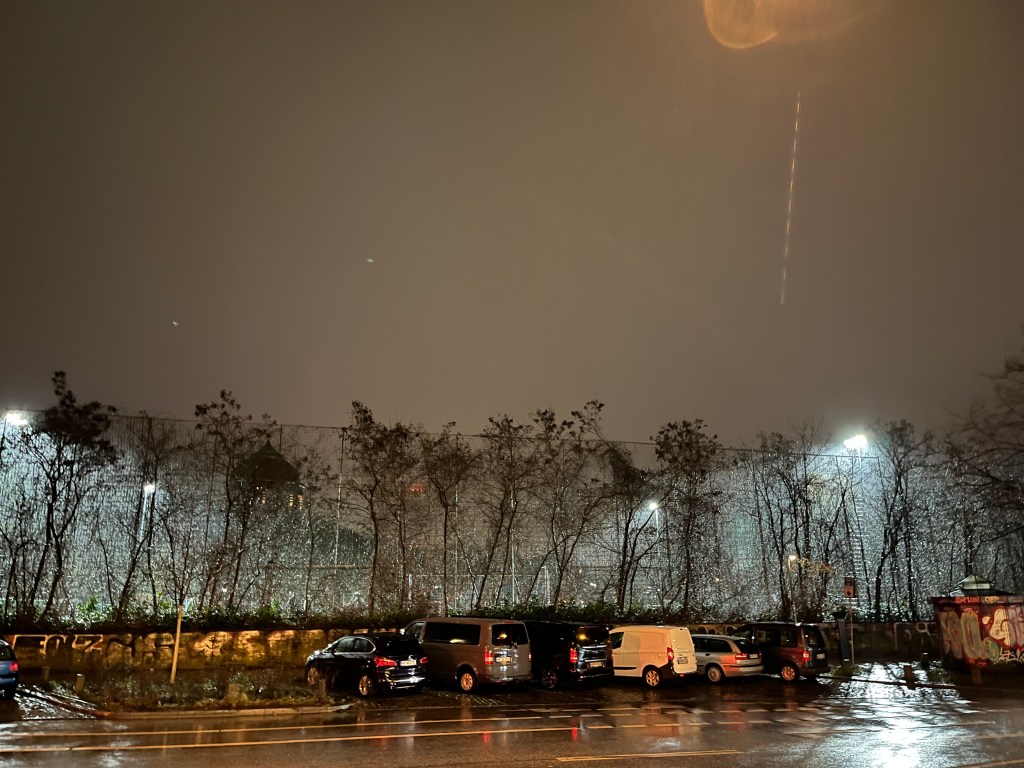
An Alien Invasion. Or a wet carpark outside a supermarket.

Bremen

Bremen is a little more than an hour by train from Hamburg. The charming scenery (a welcome upgrade from between Hamburg and Lubeck) is speckled with similarly attractive towns and villages. Noticeable was the amount of flooding in passing fields.

Bremen is another of those once successful Hanseatic cities this time located on the river Weser.

The UNESCO world Heritage sites of town hall (1405) and oddly named Roland Statue (1404), symbolising the city’s freedoms, both play a their part in Bremen’s beautiful market square. The town hall, in particular, is a proper stunner and worth the train money alone.

Contentedly installed in the town hall cellars Bremen’s Ratskeller houses one of the oldest and finest collections of German wine. St Peter’s Cathedral, dating back to the 11th century, also competes for your affections with its UNESCO chums.

And do check out the wonderfully quirky Bremen Town Musicians statue (1953) close to the town hall. A fan favourite. Including us.

Böttcherstraße (1922 to 1932), and built in the architecturally rare expressionist style according to the Bremen Tourist Site, and a gem to meander slowly down. Bremen’s oldest district, the Schnoor quarter, is a maze of pretty 5th and 16th century lanes lined with similarly pretty shops and houses.

For those craving a little modernity and retail therapy Bremen also has an attractive town shopping heart with all the usual suspects.

We knew what we were getting with Lübeck, Bremen was more of an unknown. Somewhat unexpectedly we preferred the latter to the former.

The return train was at least 30 minutes late. So much for famed German efficiency.

Omnipollo (https://www.omnipolloshamburg.com/) was another craft brew spot. And pink. Undoubtably the quirkiest of the 3 Hamburg craft outposts. Great beer and friendly service were a given.

Very pink.

Große Elbstraße

Our last full day in Hamburg. Late start, metro to Landungsbrücken (harbour) hanging a right and not our usual left towards the town centre. We like to live dangerously.

We wandered into St Pauli. Tiptoeing gentrification apparently replacing ‘don’t ever go there’ to ‘Darling, I think we should buy in St Pauli’. After Reeperbahn nastiness this was both a significant and welcome upgrade.

Große Elbstraße, scampering alongside the Elbe, was especially charming. Original fish market buildings attractively converted into shops, fish restaurants and bars. FrischeParadies is an upmarket supermarket with a fish cafe at one end. We ate there. It was fab. The wine was also splendid. We later discovered it on the shelves for less than half the price. Bugger. Should have stuck to the house wine.

Back to Schanzenviertel, breakfast treats from Denns, beer treats from Beyond Beer. It had been a bitterly cold day, even our thermals were thinking about a holiday, but a thoroughly enjoyable one.

Flying Home Day

It was snowing. Rather alot. A gallery appealed.

We slipped and slithered our way to the Kunsthalle enjoying an hour or two with some Grand Masters.

They say hi.

Back to the hotel, airport, flight home.

Final Thoughts

Highlights? Warehouse district, Miniatur Wunderland, distinct neighbourhoods, the water.

We’ve visited Berlin and Munich each a couple of times. Great cities both. But you know what, we preferred Hamburg. Even with the cold and wet weather. Hamburg is attractive, green and friendly. And perhaps doesn’t take itself too seriously.

Loved it.

Many thanks for reading.

Luxembourg City

Why Luxembourg? It was cheap. It was half term. It was 2 weeks before our intended departure. It all went rather well. Flights booked, Airb&b secured, splendid times to come.

Then not. BA comprehensively fucked up Sus’s flight plans. I won’t bore you with details, suffice to say, I arrived on the Friday morning as planned, Sus didn’t. She landed the following Monday morning. ‘Sorry for the inconvenience’ doesn’t really cover it. We were not happy. And offered some constructive criticism to BA. Along with out of pocket receipts. Of which there were many.

I’d not idled away my 3 day start slurping craft ale in a local bar. Only Saturday evening. I explored the city in readiness for Sus’s arrival.

I’m a petrol head (battery head?). From the amount of high end German metal, and similarly posh offerings from other European manufacturers, it quickly dawned that Luxembourg – or certainly Luxembourg City – was not poverty stricken. And following an early supermarket forage, expensive. More so than London.

French is widely written and spoken though German occasionally inserts itself – certainly, during our stay, in posters pushing specific mayoral and council candidates. And most everyone appeared able to fluently converse in English.

Travel within the confines of Luxembourg is considerably cheaper that buying a banana from the supermarket. Whether propelled by bus, tram or train it’s all free. All the time.

And wandering around before Sus’s delayed arrival, I discovered Belair. Belair, lying west of the main shopping district, is one of 24 neighbourhoods in Luxembourg City. It’s expensive and somewhat exclusive. The name afforded little choice. Populated with beautiful mansions and lush gardens, it’s a magnet for expats and their families. Made for an interesting interlude.

In contrast the Gare neighbourhood located in the south of the city, not unlike other areas embracing the train station, is a tad rundown. Small groups of inebriated or otherwise men inhabit the station square staring menacingly at each other. Sadly, some are undoubtably homeless, others probably on the way to being so. We never saw any violence and the locals appeared to treat them more of a nuisance than a threat.

Within a few blocks creeping gentrification transforms the area into a desirable and mixed area to live in. And considerably cheaper than Belair. As one ambles into the neighbouring bohemian Bonnevoie things become positively upmarket.

Both Gare and Bonnevoie are undergoing extensive building works – apartments, office space and tram line extensions. It will transform both neighbourhoods, in particular, the area around the train station.

Sus eventually arrived on Monday morning. By the early afternoon we were ready to together explore Luxembourg. And I keen to show off my insider knowledge.

Scene Setting. And a Little History.

Luxembourg is a Grand Duchy, apparently the only one in the world.

Luxembourg City (who names a capital after the country it governs?) is draped, rather majestically, across the deep gorges of the Alzette and Pétrusse rivers. The old town is a UNESCO World Heritage site and, contrastingly, Luxembourg City is famed for its financial and EU institutions. Counter intuitively weekend stays are often an ideal time to pop over – hotel prices drop dramatically as the suited and booted ones vacate the city.

Luxembourg City’s history is generally considered to begin in 963 when a chap called Count Siegfried acquired a rocky promontory and its Roman-era fortifications, known as Lucilinburhuc, “little castle”, and the surrounding area from the Imperial Abbey of St. Maximin. Which is close to Trier in Germany. Trier will re-appear a few 100 words further along.

The settlement that developed was protected by a stone fortification wall extended in the 14th and 15th centuries. Luxembourg – the Grand Duchy – has been been tarted around Europe with previous owners including the Netherlands, France, the Habsburg dynasty and Germany during the second world war. They should have built a bigger wall.

In 1869, the Treaty of London generously donated the western part of Luxembourg to Belgium giving the principality its modern day borders.

However, though Luxembourg has suffered some shrinkage during the past few centuries it’s had the last chortle. It’s now one of the world’s richest countries, with a hugely successful financial services industry, political stability and European integration. Nicely played Luxembourg.

Centre and Shopping

The Corniche is a large road and pedestrian bridge depositing eager tourists across the 2 gorges into the city proper. Peering over, one side consists of a disappointing trickle masquerading as a river, the beginnings of the picturesque old town and what appear to be works constructing recreational facilities.

The other boasts a beautiful park encompassing surviving and gorgeous city walls. A skatepark adds modernity.

A short stroll deposits one in the main shopping area. Shops, bars, restaurants, with a couple of large and attractive squares thrown in, make Luxembourg City’s shopping district a most appealing spot to shop, eat or drink. And people watch. Architecturally attractive showcasing the 18 and 19 hundreds with some older structures dotted carelessly about. Though still wishing I’d bought a pair of alluring shorts form the always quality and good value Mountain Warehouse (fashion not our cup of designer labels) purchasing opportunities are generally limited to chains you’d find in Paris or Croydon.

Adjacent to consumerism central are modern office blocks creating the business district.

Kirchberg’s public park is a green and well used oasis close to that shopping heaven. The park has a natural (probably) bowl acting as a focal point. Nature bathe whilst admiring your new purchases. The park is delightful.

A city centre highlight was a busker all over an electric violin. The 2 compositions I heard – Adele’s ‘Someone Like You’ and the much copied ‘Hallelujah’ were both gorgeous and haunting.

Trier

An hours train ride transport one to another town and another country. Doesn’t that sound great? Trier is Germany’s oldest town boasting 9 UNESCO World Heritage sites. Bit greedy.

A pleasant 10 minute stroll from the station bring eager sightseers to the old town and Porta Nigra. The remarkedly preserved Roman Gate welcomes visitors a tad more enthusiastically than perhaps it did 2,000 years ago.

Behind the imposing Porta Nigra is the main square – Hauptmarkt. Half timbered buildings dating back to the 15th century surround the 1595 Market Fountain depicting something religious.

Trier is a genuinely lovely place to wander. A Basilica dates back to the 4th Century, a Jesuit Church traces its origins to the 14th century, the House of the Three Magi demonstrates how to keep up with the Schmidts -13th century style. A wander through the burbs rewards worthy wanderers with a Roman Amphitheatre. And on the return wander other assorted Roman ruins magically appeared.

Trier is situated on the Mosel River, a tributary of the Rhine. We couldn’t find it. A friendly, if mildly bemused local, directed us. It was pretty. Not a feature of Trier. All that fancy architecture perhaps giving it an inferiority complex.

Food consisted of a bratwurst mit bread and an obscenely large slice of cherry crumble. We shared the latter. Though disgustingly disgusting that Bratwurst was delicious.

Beer in Trier

Trier, though smaller, proved a better destination than Luxembourg City for crafted liquid sustenance. Trierer Petrusbräu Brewery (www.triererpetrusbraeu.de) was an odd place. No tap room, no seating (a bench was kindly provided) and possibly a car repair garage in a lesser incarnation. We sat in their petit carpark shaded by one the brewery’s Transit Vans. We received perplexed peeks. And tried to appear as if we had planned this all along. Which we hadn’t.

Beer is served out of a hatch looking straight into the brewery workings. The only one they had on tap was an amber ale. And when I say on tap this necessitated a spanner, baby blow torch and a certain amount of effort. Basically, straight from the tank.

It slowly dawned, being the clever people we believe ourselves to be, that the carpark was for punters, usually in cars, ordering bottled beer or filling – or returning – growers and kegs.

Nevertheless, the beer – more old school than the hugely hopped varietal – was excellent, cheap and cold. The chap who went to so much effort, and spoke better English the me, couldn’t have been friendlier or more helpful. I felt almost guilty.

We think it’s opposite a convent. Give them a go. The brewery not the convent.

Craftprotz Kreativbierbar (https://craftprotz-kreativbierbar.de/) is – dare I say – a conventional tap house – great beer, friendly staff and presumably dog friendly. Their logo is fab.

Twelve taps, a bottle shop next door (both with seating) on an attractive thoroughfare create a wonderful locale to enjoy an ale and people ogle. I likely would still be there if Sus hadn’t suggested (strongly) a train back to Luxembourg might be a marginally better option.

Trier is an hour train journey from Luxembourg. It’s a beautiful and fascinating town, a must if you have the time.

Old City of Luxembourg

Is stupidly pretty. Located on the confluence of the Alzette and Pétrusse Rivers, protected on one side by a steep, rocky outcrop, the old city had been continuously fortified since that clever Count Siegfried in the 10th century. Some chaps from Burgundy and the Habsburg’s continued the process before the Spanish properly went to town in the 17th century. In later centuries, the French, Austrians and Prussians all arrived, built and left leaving their own legacies. It became one of the strongest fortresses in Europe.

Following that pesky 1867 Treaty of London the majority of the fortifications were tragically demolished. Happily, for tourists with little more than a spot of lite carving on their minds, many vestiges representative of all these eras remain. These include a number of gates, forts, bastions, redoubts and casemates.

Encased by these structures of war is the late mediaeval old city itself – a wonderful place to explore, eat and drink. Again. Any stroll should include time by the river and a clamber onto what those Victorian vandals left of the walls. The latter affords stupendous views down into the old city.

The old city has 2 Michelin star restaurants – conveniently opposite each other – a French style wine bar and a recently reopened pub offering live music. Lucky locals.

The old city is genuinely gorgeous and, if you only have a day, spend it there.

The Store was easily the choice locale for a spot of the craft stuff in Luxembourg (11 Av. de la Liberté, 1931 Gare Luxembourg). I’d discovered The Store before Sus’s arrival and returned after several million steps (iPhone pedometer) meandering the old city. The Store has 6-8 taps and several beer fridges. Inside space is limited though a number of large benches outside offer alternative people watching options. The staff are fabulous.

We’d booked, that evening, seats for a tap takeover by the French (yep, French) Piggy Brewing Brewing Company. Excellent ales (‘Abeba Groove’ a particular favourite), friendly locals and gorgeous weather all made for a most palatable end to the day.

Chateau de Vianden

Is a little under an hour by train plus a 25 minute bus ride to Vianden from Luxembourg. And because the Chateau is in the Grand Duchy all that travel is free. Incredible. And, as with the train trip to Trier, offers passengers a glimpse of the Luxembourg outside of eh…Luxembourg (City). Lush and dotted with small towns and villages from what we saw.

Chateau de Vianden was constructed between the 11th and 14th centuries, criminally sold piece by piece in the 19th century before falling into a state of ruin in modern times. In 1977 the Grand Duke of Luxembourg transferred it to state ownership instituting a restoration to its former glory.

From afar you might be walking into a Disney fairytale – without fireworks or talking animals. Once inside the restoration becomes apparent, and for me, diminishes a little the overall spectacle. However, don’t go thinking Chateau de Vianden is a cheap Disney pastiche of its former self. It isn’t. The mediaeval building is very much in evidence offering a peek into what the Chateau once was. Spectacular. And, in many ways, still is.

And do make time for Vianden, the town Chateau de Vianden (spoiler) looms over. Benignly I like to think. The small town, sitting charmingly on the River Our (yep, really) is worth an hour of anyone’s meandering.

The following day was our last. An evening flight meant, once luggage safely deposited at the train station ($5 per bag), we were free to explore. Sus suggested riding the tram to its final destination. We did. It went 2 stops. Should have gone the other way. So we did.

The Trams are delightful. And busy. It’s not difficult to understand why – air conditioned, efficient, airy and plentiful. The half hour journey glided serenely past – all adjacent to the route – the University, National Library, the Philharmonic, European Parliament and Luxexpo, a huge conference and concert space.

This part of the city appears modern, recently developed and worthy a gander. Use the trams, as we did, as a hop on hop off bus service. But better. And cheaper.

Final Thoughts

Some cities are just a bit rubbish – LA and Rio spring quickly to mind. Others, though perfectly pleasant, are over hyped – Paris and Sydney. Luxembourg quietly exceeds expectations. We both loved it and I, especially, was sorry to leave.

Luxembourg City is expensive and, perhaps for some, lacks a little soul. I, however, could happily live there. Just not for ever.

And finally, Sus has recently become an Independent Travel Agent for InteleTravel. You can book your next trip on her website: https://susantuttle.inteletravel.uk/booktravel.cfm OR contact her for great deals: susan_tuttle_2006@yahoo.co.uk. She’d be happy to help! 

Many thanks for reading (Tony Leigh, July 2023).